

Tanzania is one of Africa’s most diverse destinations for travelers. Within just a few hundred kilometers, you can go from the plains of the Serengeti—where the Great Migration takes place—to the Ngorongoro Crater, from the snow-capped peak of Kilimanjaro to the beaches of Zanzibar. The country protects about one-third of its territory through parks and reserves and is also home to archaeological sites of fundamental importance to human history, historic coastal cities, and peoples who preserve traditions dating back thousands of years.
Its diversity is even reflected in its flag: the green of the land and vegetation, the blue of the great lakes and the Indian Ocean, the black of its people, and the yellow of its mineral wealth. In this guide, you’ll find the 10 must-see places in Tanzania, other things to do during your trip, and some tips for combining everything into a single itinerary.
10 Things to Do and See in Tanzania
It would be impossible to list all the parks, reserves, and places worth visiting: Tanzania is more than three times the size of Italy. These are the ten that, in our opinion, are not to be missed, starting with the parks in the north—where most safaris take place—and moving on to the islands and the country’s wildest areas.
For an overview of all protected areas, visit our page on Tanzania’s national parks.
1. Serengeti National Park: The Great Migration
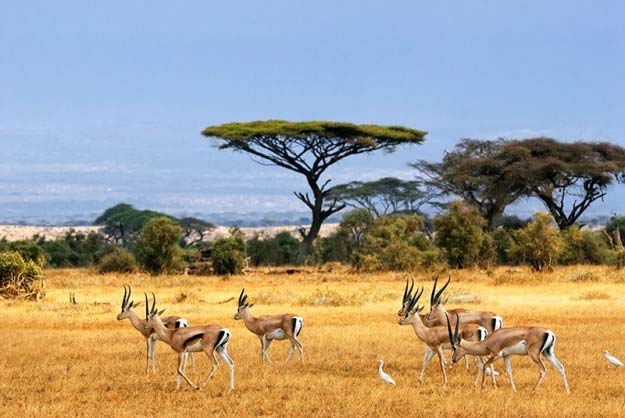
With nearly 15,000 km² of savanna, the Serengeti is Africa’s most famous park and a UNESCO World Heritage Site. Its most famous spectacle is the Great Migration: over a million wildebeests, along with hundreds of thousands of zebras and gazelles, move year-round in a vast loop between the Serengeti and the Masai Mara Reserve in Kenya, following the rains and fresh grass. From December through March, the herds are in the southern part of the park, where the calves are born; from July through October, they are in the north, where the dramatic crossings of the Mara River take place. The itineraries designed around these events are featured in our special section dedicated to the migration.
Even those who don’t visit during the migration will find plenty to see: the Serengeti has an abundant resident wildlife population and one of the highest concentrations of predators on the continent, including lions, leopards, cheetahs, and hyenas, and is home to all of the Big Five. One experience worth considering is a hot-air balloon safari: a sunrise flight over the plains, followed by breakfast in the savanna, offers a completely different perspective on the park. During the dry season, when the vegetation is low, visibility is exceptional—especially for photographers.
2. Ngorongoro Crater: The Crater of Wonders
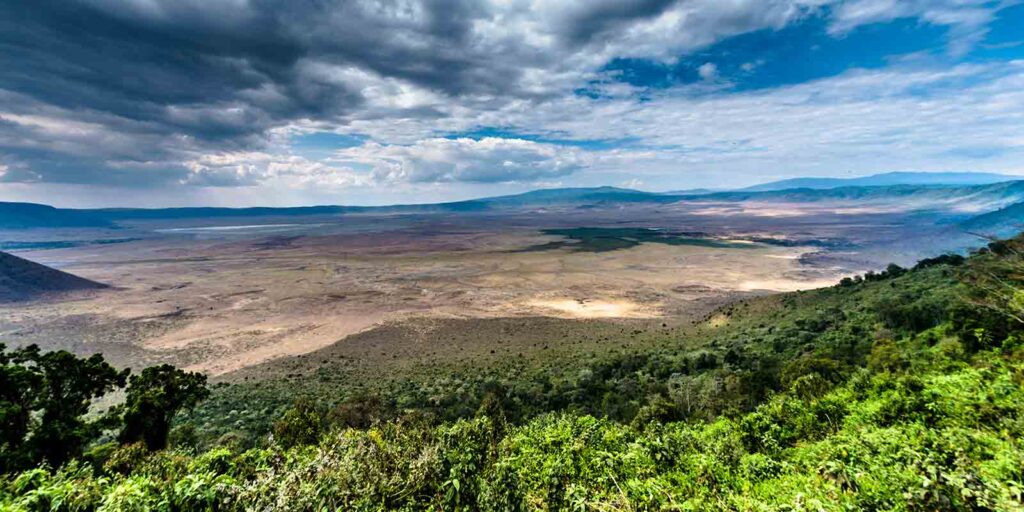
The Ngorongoro Crater is perhaps Tanzania’s most famous landmark. It formed about two or three million years ago when a large volcano collapsed in on itself; today it is the world’s largest intact caldera, with a diameter of about 20 km, an area of about 260 km², and a floor that lies about 600 meters below the rim. The view from above is breathtaking, and the descent down the walls is an adventure in itself.
About 25,000 large mammals live permanently on the crater floor, one of the highest densities of wildlife on the planet. It is one of the best places to see the Big Five in a single day, including the rare black rhinoceros, which is protected here through constant monitoring. However, the crater is only part ofthe Ngorongoro Conservation Area, a UNESCO World Heritage Site, which includes highlands, forests, the Olduvai Gorge—where the Leakeys discovered some of the most important fossils for the study of human origins—and Maasai villages, where the people live alongside the wildlife.
3. Tarangire National Park: The Park of the Elephants
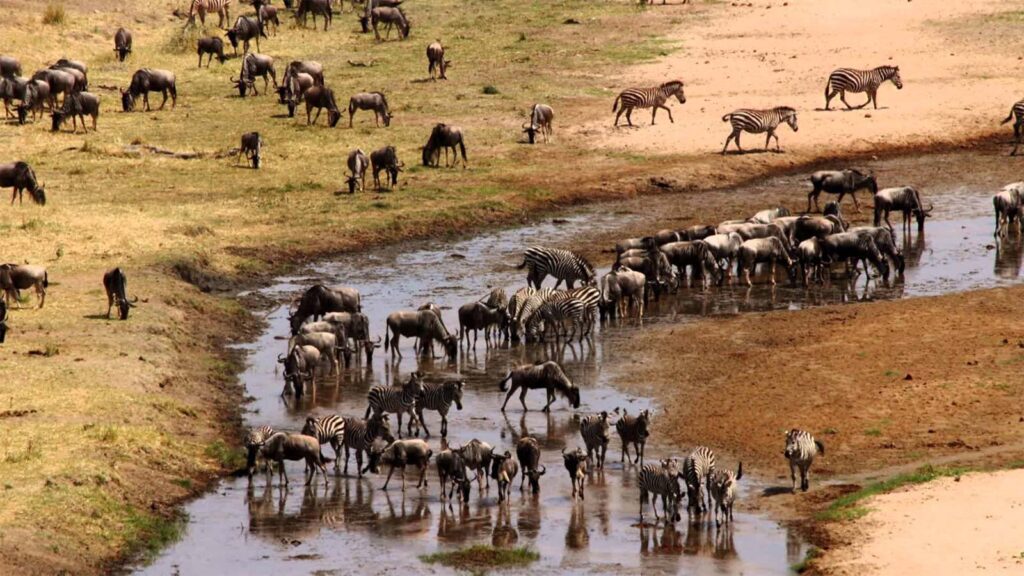
If your dream is to see elephants, Tarangire is the place to go: it’s one of the parks with the highest concentration of elephants in Tanzania. The landscape is marked by enormous baobab trees—some of which are centuries old—and by the Tarangire River, which during the dry season, from June to October, becomes the area’s only source of water. During those months, the park experiences its own small migration: thousands of elephants and tens of thousands of zebras and wildebeests arrive from the surrounding lands, forming spectacular herds.
In addition to elephants, Tarangire is home to buffalo, giraffes, lions, and several antelope species that are less common in other northern parks, such as the greater kudu and the oryx, and is home to over 500 species of birds. It is also one of the parks where, with certain tour operators, you can go on night safaris and walking safaris.
4. Lake Manyara National Park: Birds and Lions in the Trees
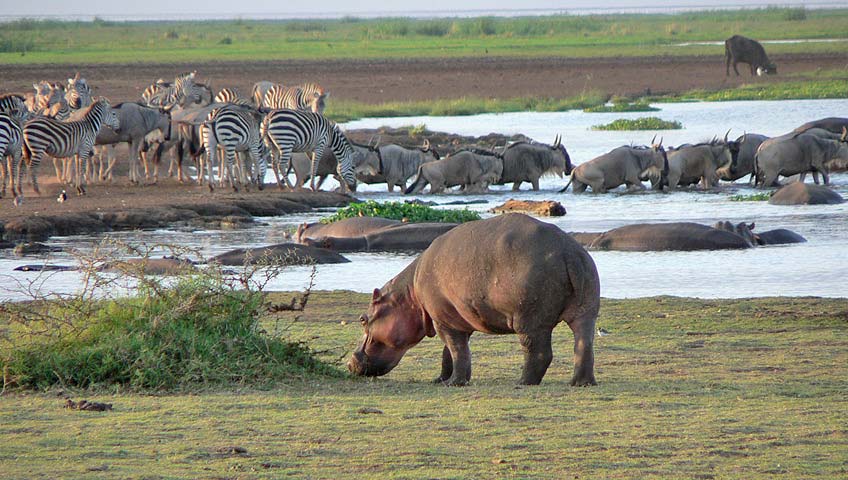
Lake Manyara is one of Tanzania’s smallest national parks, but it is among the most diverse: it stretches at the foot of the Rift Valley escarpment, amid forests fed by underground springs, grasslands, marshes, and a large alkaline lake. In just a few hours, you can pass through a wide variety of environments.
For birdwatchers, it’s a must-see destination, with about 400 recorded species: flocks of flamingos, pelicans, storks, fish eagles, and hornbills in the forest. Among the curiosities that attract many visitors are the lions that sometimes rest on acacia branches: a rare behavior, observed in only a few other places in Africa, and difficult to spot because the park’s lions are shy. Manyara can easily be visited in a single day, often as a stopover between Tarangire and Ngorongoro.
5. Arusha National Park: Forests and Lakes at the Foot of Mount Meru
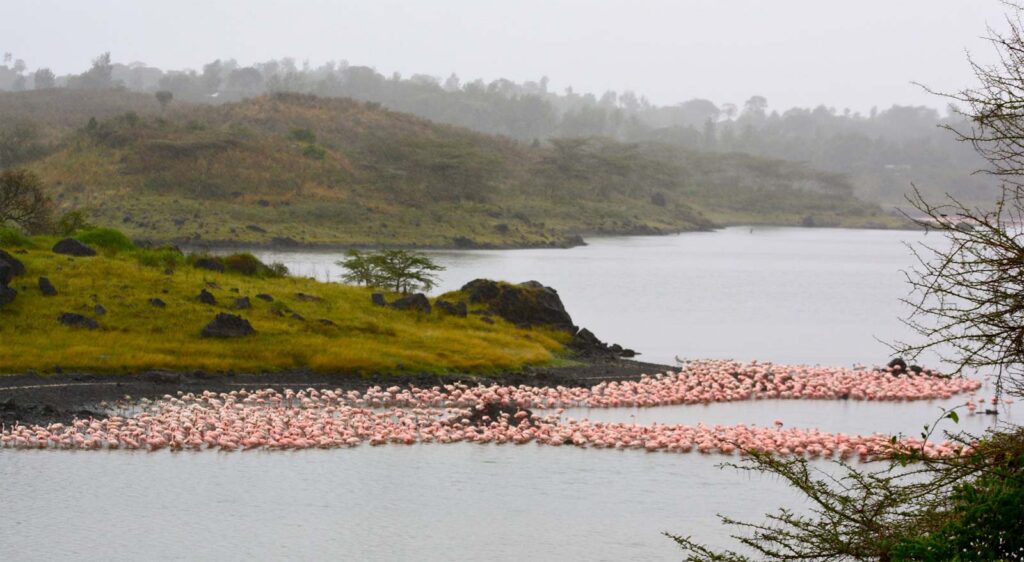
Arusha Park is the starting point for most of our itineraries, and it is often underrated. Within a small area, it encompasses the slopes of Mount Meru, the Ngurdoto Crater—known as “Little Ngorongoro”—and the Momella Lakes, which are home to flamingos. The forests are home to black-and-white colobus monkeys, giraffes, buffalo, and numerous bird species, and on clear days, you can see Kilimanjaro on the horizon.
It is one of the few parks in the north where you can go on walking and canoe safaris, and it is also perfect for landscape photography enthusiasts. In the area around Arusha, with a guide who knows the local community, you can visit Maasai villages to get an up-close look at their daily life and traditions.
6. Kilimanjaro: Africa’s Highest Peak
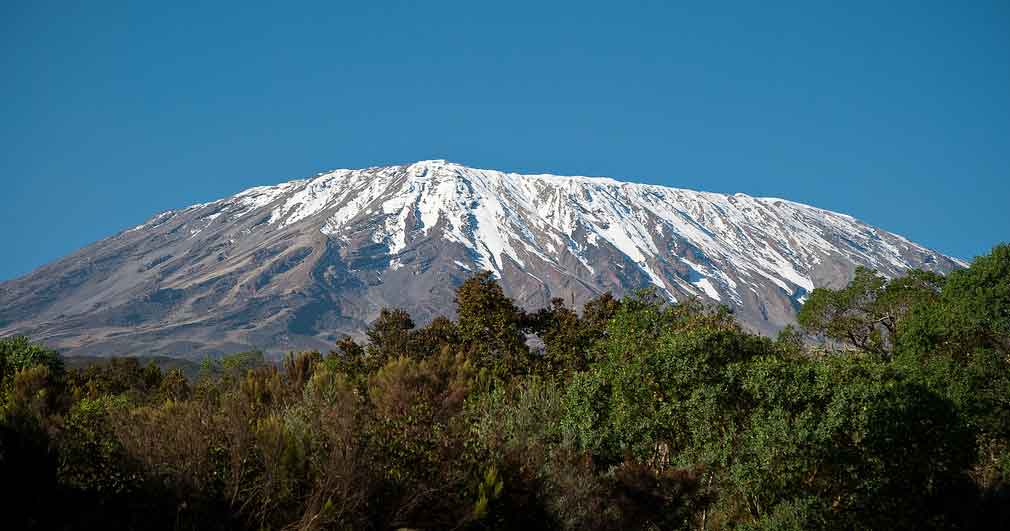
At 5,895 meters, Kilimanjaro is the highest mountain in Africa and the world’s highest isolated volcano. Climbing to Uhuru Peak, the summit, does not require mountaineering skills, but it does require good physical conditioning and, above all, a route long enough to allow the body to acclimate: typically 5 to 8 days, depending on the route chosen. The ascent takes you through every climate on Earth, from rainforest to moorland, from high-altitude desert to the crater’s glaciers—an experience many describe as transformative. The routes we offer are described on the Kilimanjaro trekking page.
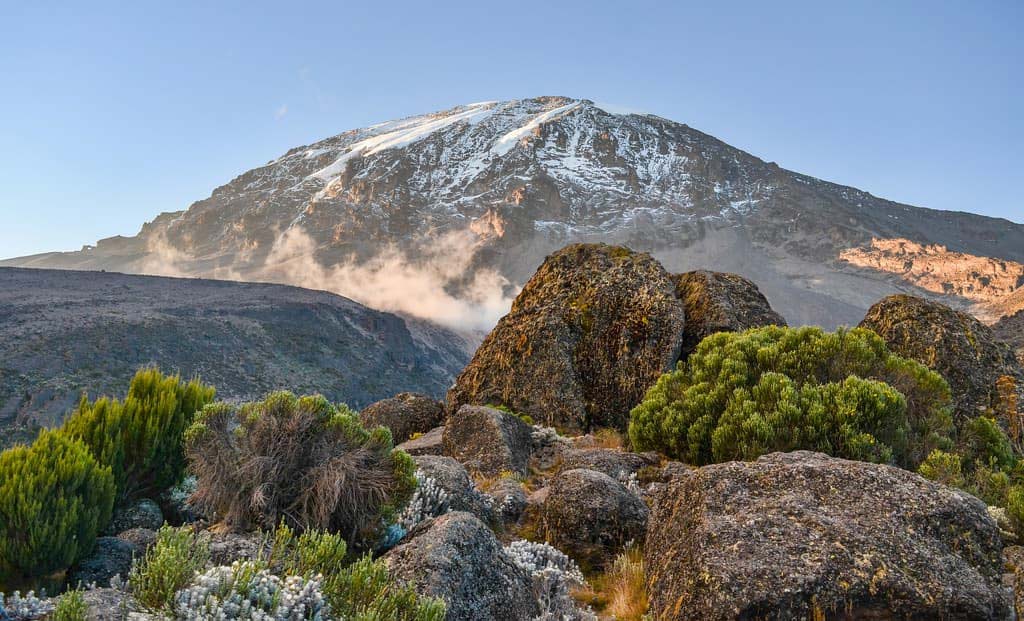
Those who don’t want to tackle the climb can experience the mountain in a more leisurely way. In the forest of Kilimanjaro National Park, you can go on day hikes among colobus monkeys and other primates, and from the town of Moshi, you can reach the Chagga villages of Materuni, with waterfalls hidden among the plantations and small cooperatives where coffee is still roasted and ground by hand.
7. The Zanzibar Archipelago: Beaches, History, and Spices

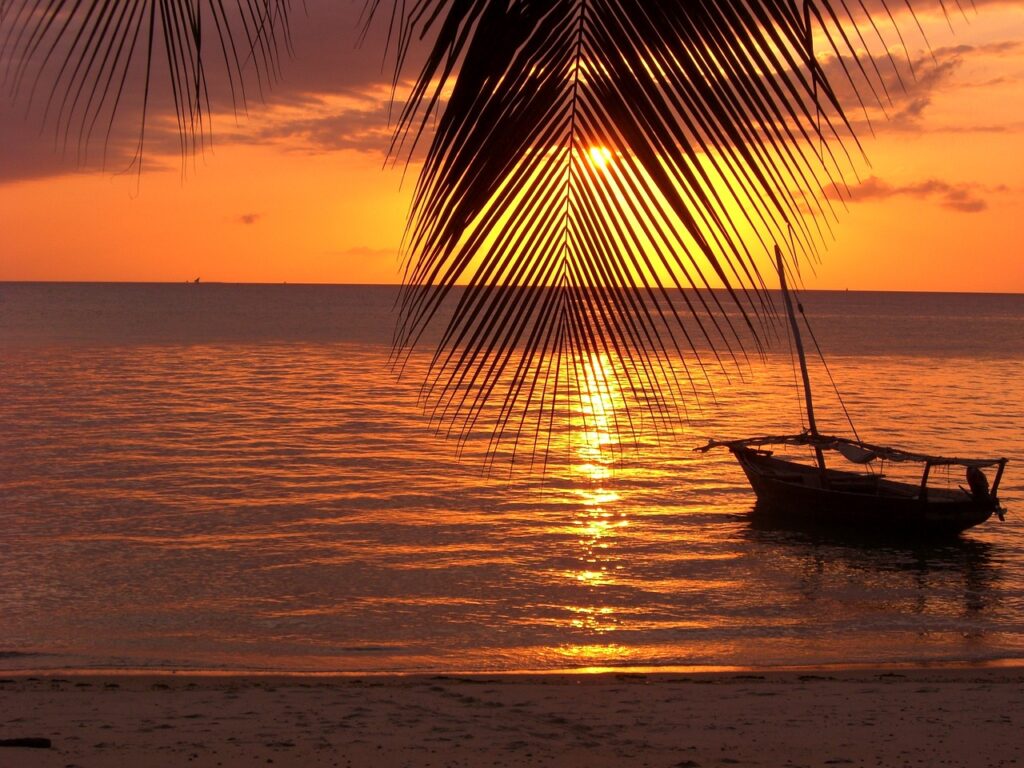
Tanzania isn’t just savanna. Off the coast liesthe Zanzibar Archipelago, consisting of the main islands of Unguja—commonly known as Zanzibar—and Pemba, as well as dozens of smaller islands. Beaches of pristine white sand, a coral reef teeming with life, and lagoons that change color with the tides make it one of the most beautiful beach destinations in the Indian Ocean. Snorkeling at Mnemba Atoll, the dolphins of Kizimkazi, sea turtles, and—on Prison Island—the giant Aldabra tortoises are among the most popular experiences. To choose the right coast for the vacation you’re looking for, check out our guide on where to go in Zanzibar.
Zanzibar also has a rich history: Stone Town, the old city and a UNESCO World Heritage Site, is home to sultans’ palaces, carved gates, markets, and the Slave Memorial. In the inland plantations, cloves and spices—which made the “Spice Island” famous—are still cultivated. A few days on the island are the perfect complement to a safari, as in our packages combining national parks and the beach.
8. Mafia Island: Scuba Diving and Whale Sharks
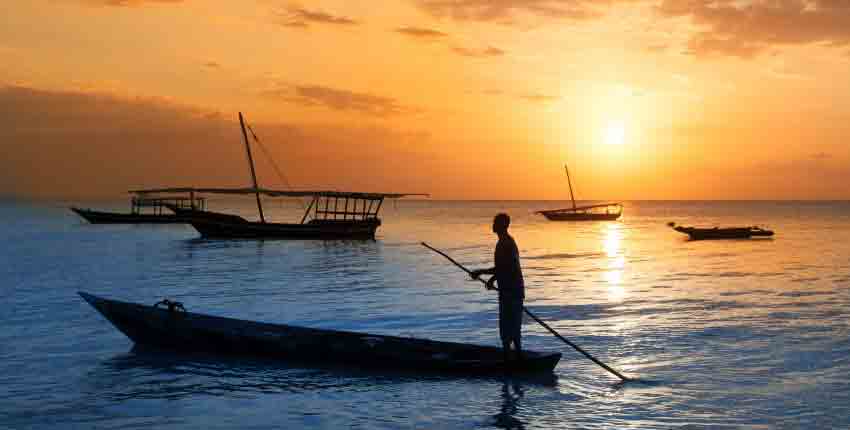
South of Zanzibar,the island of Mafia is the best-kept secret of the Tanzanian coast. Its marine park, established to protect one of the richest ecosystems in the Indian Ocean, includes mangroves, seagrass beds, lagoons, and coral reefs, and is an ideal destination for diving and snorkeling, with sea turtles, manta rays, and hundreds of species of tropical fish.
Roughly from October to March, off the coast of the island, you can swim with whale sharks—the world’s largest fish—in encounters managed with respect for the animals; between July and October, you can also spot humpback whales during their migration. On land, Mafia offers fishing villages, quiet beaches, and very little tourism.
9. Selous and Nyerere National Park: Boat Safaris in the South
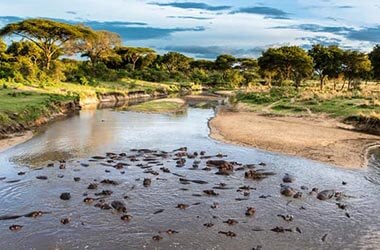
The Selous is one of Africa’s largest protected areas and a UNESCO World Heritage Site; its northern part, which is popular with tourists, has become Nyerere National Park. Together with the nearby Mikumi Park, it forms a vast southern ecosystem that is much less crowded than the northern parks and still authentically wild.
The heart of the park is the Rufiji River, with its lakes and channels: here, safaris are taken by boat—among hippos, crocodiles, and elephants that come to drink—and on foot with a ranger. The reserve is home to one of the largest populations of African wild dogs—the extremely rare African wild dogs—as well as buffalo, giraffes, lions, and hundreds of bird species. It can be reached by plane or by road from Dar es Salaam, or as part of our three-day safari.
10. Lake Natron and Ol Doinyo Lengai: Tanzania’s Strangest Landscape

On the border with Kenya, Lake Natron looks like a landscape from another planet: an alkaline, extremely hot lake, colored red and orange by algae and bacteria, surrounded by expanses of salt. Hundreds of thousands of lesser flamingos nest here, especially between August and October: it is their primary breeding site in the world. In the surrounding area, visitors can take walks to the Engare Sero River waterfalls and see fossilized human footprints preserved in the volcanic mud.
Rising above the lake isOl Doinyo Lengai, the Masai’s “Mountain of God,” the only active volcano in the world that erupts carbonatite lava—black when it emerges and white when it cools. The nighttime climb to the crater, to reach the summit at dawn, is one of the most challenging and memorable experiences in Tanzania.
Other Things to Do in Tanzania
In addition to the ten main attractions, there are experiences that make your trip more enriching and personal:
- Meeting the Hadzabe and the Datoga: On the shores of Lake Eyasi live the Hadzabe, one of Africa’s last hunter-gatherer peoples, whom you can accompany at dawn on a hunting expedition with bows and arrows, and the Datoga, herders and blacksmiths who still work metal using traditional techniques.
- Visit a Maasai village to learn about the herders’ way of life, their dances, and their traditional dwellings.
- Go on a walking safari with a ranger in Arusha National Park, Selous, or Ruaha to explore the savanna up close, among animal tracks, plants, and small wildlife.
- Try a night safari in Tarangire or Lake Manyara, on the lookout for animals that come out after sunset.
- Spend the night in a tented camp in the Serengeti, listening to the calls of lions and hyenas at night.
- Bathing in a hot spring: Near Moshi, the Chemka (Kikuletwa) springs form a natural pool of warm, clear water surrounded by vegetation.
- Explore Ruaha, one of the country’s largest and most remote parks, known for its large prides of lions: Ruaha National Park is the ideal choice for those who have already been on a safari in the north.
- See chimpanzees in Gombe and Mahale National Parks on Lake Tanganyika—for those with more time who are seeking a rare experience.
- Take a spice tour of the plantations around Stone Town, in Zanzibar.
To make the most of these encounters, a few words of Swahili—a “jambo” or an “asante sana”—are always appreciated.
How to Combine Destinations into a Single Trip
| Days Available | What you can see |
|---|---|
| 4–5 days | Tarangire, Lake Manyara, and Ngorongoro, with or without a stop in the Serengeti |
| 7–9 days | The Complete Northern Circuit: Arusha, Tarangire, Manyara, Serengeti, Ngorongoro, Lake Eyasi |
| 12–15 days | A safari in the north plus a few days at the beach in Zanzibar |
| More than 15 days | Kilimanjaro plus a safari, or the northern and southern parks, or a safari plus Zanzibar and Mafia |
Here are two examples from our catalog: the 9-day “Grande Avventura” safari through the northern parks, including Lake Eyasi, and the 15-day tour through the savanna and Zanzibar.
The best time to visit most places is from June to October, during the dry season, and from December to February; for the migration, the ocean, and Kilimanjaro, the ideal months vary, as we explain in our guide to the best times to travel.
Frequently Asked Questions
What should you see in Tanzania on your first trip?
For a first-time visit, the must-see destinations are the northern parks: the Serengeti, the Ngorongoro Crater, Tarangire, and Lake Manyara. If you have more time, you can add a few days at the beach in Zanzibar or a climb up Kilimanjaro.
How many days do you need to visit Tanzania?
For a safari in the northern parks, you’ll need at least 5–7 days. With 9–10 days, you can also visit the lakes of the Rift Valley, and with 12–15 days, you can combine your trip with a visit to the beach in Zanzibar.
Which is better, the Serengeti or the Ngorongoro Crater?
They complement each other and are almost always visited together. The Serengeti offers vast open spaces, the Great Migration, and large predators; the Ngorongoro Crater concentrates a huge number of animals in a small area and is one of the best places to see black rhinos.
What are some things to do in Tanzania besides going on a safari?
Climb Kilimanjaro, go snorkeling in Zanzibar or Mafia, visit Stone Town, meet the Hadzabe people at Lake Eyasi, see the flamingos at Lake Natron, and—for those who have time—the chimpanzees at Lake Tanganyika.
Every trip to Tanzania is different, because it depends on what excites you the most: the big predators, the mountains, the sea, or encounters with the local people. Tell us which places on this list made an impression on you and the number of days you have available: we’ll combine them into a customized itinerary with the right travel times. If you’d rather start with a pre-planned itinerary, browse All of our tours in Tanzania.