

The best time for a safari in Tanzania is the dry season, from June to October: the vegetation is low, the animals gather around water sources, and in the northern Serengeti, the Great Migration’s river crossings take place. An excellent alternative is January–February, the brief dry spell when hundreds of thousands of wildebeest calves are born in the southern Serengeti. The least ideal months are April and May, when the heaviest rains fall, but they are also the most affordable.
In fact, you can go on a great safari in Tanzania any month of the year: what you see, where you should go, and how much you’ll spend vary. In this guide, you’ll find a calendar of the seasons, the migration route month by month, and the recommended times to visit each park, Zanzibar, and Mount Kilimanjaro.
At a Glance
- June–October: dry season, the best time for wildlife sightings; peak season with higher prices
- January–February: short dry season, calving season in the southern Serengeti
- November–mid-December: brief rains, usually afternoon thunderstorms; good value for money
- Mid-March–May: prolonged rains, lush landscapes, lower prices, and less crowded parks
The Seasons in Tanzania
Tanzania is located just south of the equator, so temperatures vary little throughout the year. The seasons are marked by the rains, brought by the Indian Ocean monsoons, which occur in two distinct periods. The dates are approximate: the start and end of the rainy seasons may occur a few weeks earlier or later from one year to the next.
| Period | Season | What to Expect |
|---|---|---|
| June–October | Long dry season | Clear skies, warm days, and cool nights; sparse vegetation and wildlife concentrated near the water. High season. |
| November–mid-December | Short showers | Short showers, often in the afternoon, alternating with sunny spells. The savanna turns green again. |
| Mid-December–February | Short dry season | Hot, with sporadic rains; the migration begins in the southern Serengeti. Peak season around the holidays. |
| Mid-March–May | Prolonged rains | The heaviest rains of the year, with April typically being the rainiest month. Some trails become difficult to navigate, and some camps close. Off-season. |
Climate and Temperatures, Area by Area
Altitude has a greater impact on temperatures than the month. These values are approximate:
- Arusha and the northern highlands (about 1,400 m): mild days, around 25–28 °C, and cool nights, especially between June and August.
- Serengeti, Tarangire, Manyara: Hot days, often above 25 °C, and pleasant nights. At dawn, in an open-top 4×4, a sweatshirt is almost always necessary.
- Ngorongoro Crater rim (over 2,200 m): This is the coldest area on classic safaris. Between June and August, nighttime temperatures can drop to just a few degrees above freezing: a heavy jacket is essential.
- Zanzibar and the coast: hot and humid year-round, with temperatures often exceeding 30 °C between December and March.
- Kilimanjaro: The climate changes with altitude, from the rainforest to the summit, where temperatures are below freezing in every season.
Precisely because of these temperature fluctuations, it’s best to dress in layers: the complete packing list is on the Tanzania travel page.
The Great Migration, Month by Month
The migration of over a million wildebeests, accompanied by zebras and gazelles, is not an event lasting just a few days but a continuous cycle that follows the rains and fresh grass in the Serengeti ecosystem. Knowing where the herds are located during the different months is the best way to choose both the time of year and the area of the park where you’ll be staying.
| Months | Where the herds are located | What to see |
|---|---|---|
| December–March | Southern Serengeti plains and the Ndutu area, withinthe Ngorongoro Conservation Area | Birthing season, peaking around February, with high predator activity |
| April–May | Central and Western Serengeti | The herds move northwest; rainy season and less crowded |
| June–July | Western Corridor, Grumeti River | First crossings of the Grumeti River; start of the dry season |
| July–October | Northern Serengeti, Mara River | The Mara crossings—the most spectacular and most sought-after event |
| November | Return to the Central and Southern Serengeti | With the brief rains, the herds are heading south again |
The movements depend on the annual rainfall, so the dates may shift by a few weeks. That’s why, in our specialized itineraries, we select camps based on where the herds are located at that time: the calving season safari (December–March), the herd safari (July–September), and the river-crossing safari (August–September). All these options are featured in the special “Great Migration” guide.
The best time to visit, park by park
Serengeti
Excellent year-round, because even outside the migration season, it is home to an abundant resident wildlife population, including lions, leopards, and cheetahs. The ideal time depends on what you’re looking for: December–March for births in the south, July–October for the Mara crossings in the north. All information about the park can be found in the Serengeti National Park profile.
Ngorongoro Crater
The crater’s wildlife is largely resident, so it’s worth visiting any month of the year, and it’s one of the best places in the country to see black rhinos. Between June and October, the crater floor is drier and visibility is better; between December and March, a visit here pairs well with the birthing season in nearby Ndutu. More details in theNgorongoro Conservation Area.
Tarangire
The park is at its best during the dry season, from June to October, when the Tarangire River becomes the area’s only source of water and attracts large herds of elephants—among the largest in the north. During the rainy season, the animals disperse, and sightings are less concentrated. See the Tarangire National Park fact sheet.
Lake Manyara
It’s a great place to visit year-round. During the rainy season, from November through April, the lake fills up and migratory birds arrive—the favorite time of year for birdwatchers. See the Lake Manyara National Park fact sheet.
Arusha
. The closest to the city and the airport, it can be visited year-round: it is often the first or last stop on a trip. On clear days during the dry season, it offers the best views of Mount Meru and Kilimanjaro. See the Arusha National Park fact sheet.
Southern Parks: Selous and Ruaha
The southern parks are more remote and less crowded, and are best visited during the dry season, from June to October. During the long rainy season, many trails become impassable and several camps remain closed. See the fact sheets for the Selous Game Reserve and Ruaha National Park, as well as our three-day safaris to Selous and Ruaha.
Lake Natron and Eyasi
Lake Natron is the main nesting site for East Africa’s lesser flamingos: the best time to see them in large numbers is approximately from August to October. It is also the base for a sunrise ascent of Ol Doinyo Lengai. Lake Eyasi , home to the Hadzabe, can be visited year-round; in the dry season, access roads are easier. All of the country’s lakes are in the Tanzanian Lakes Section.
When to Visit Zanzibar
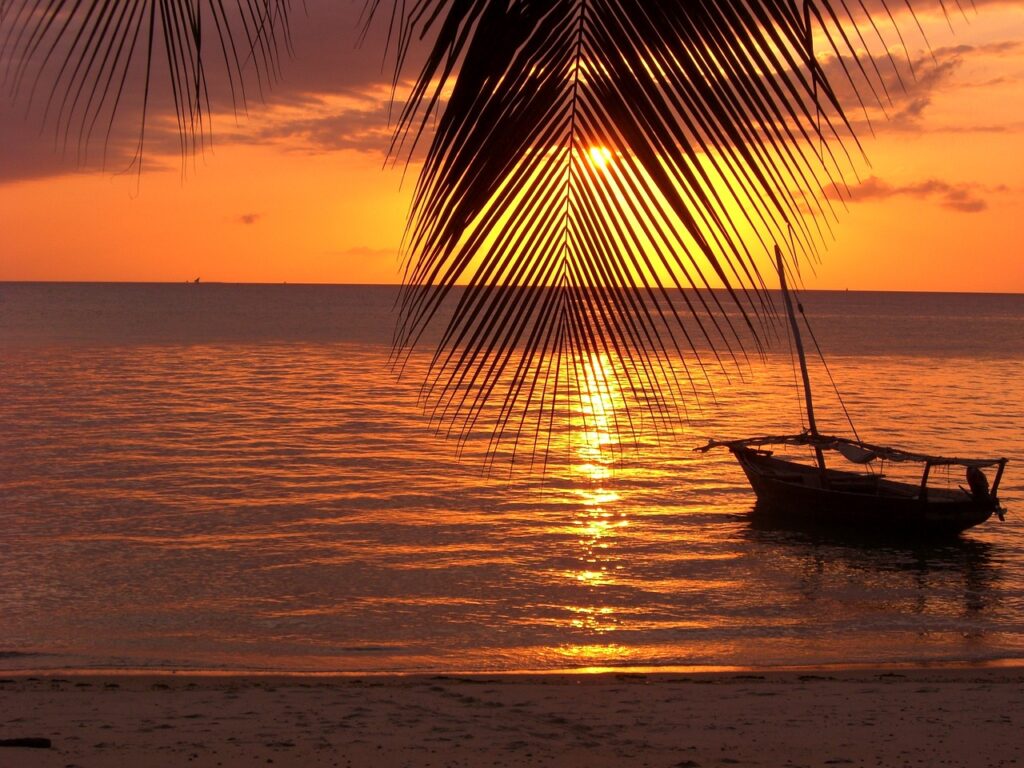
The best times for beach activities coincide with the dry seasons: from June to October, when temperatures are more pleasant and the air is less humid, and from December to February, when it’s warmer. April and May are the rainiest months, even along the coast. That’s why combining a safari with a beach vacation works best during the best months for safaris. For the full picture, see the guide on the best time to visit Zanzibar; the islands are described in the profilesof the Zanzibar, Pemba, and Mafiaarchipelagos, and the combination packages are listed on the Tanzania and Zanzibar page.
When to Climb Kilimanjaro
The best times for the climb are the two dry seasons: from late June through October—the most popular period—and from January through early March, when it’s warmer and the sky is often clear at the summit. Avoid April and May, when rains make the trails muddy and visibility poor. At the summit, temperatures drop below freezing in every month, and the key to reaching the top remains acclimatization—that is, choosing a route with enough days. The routes we recommend are the Marangu and Machame trails, including options that combine trekking with a safari; all the information can be found on the Kilimanjaro trekking page.
High and Low Season: How Prices Change
July–October and the end-of-year holidays are the most expensive times: lodges and camps charge full rates, flights cost more, and spots at camps near the migration must be booked many months in advance. In April and May, many accommodations lower their prices, and the Serengeti entrance fee is also lower; in exchange, you can expect frequent rain. November and June often offer the best balance between conditions and cost. The breakdown, item by item, is in our guide to the cost of a safari in Tanzania.
Frequently Asked Questions
What is the best month for a safari in Tanzania?
For most travelers, the best months are from June to October—the dry season—when animals gather near water sources. To witness the births during the migration in the southern Serengeti, however, the ideal time is January–February.
When can you see the Great Migration in Tanzania?
All year round, because it’s a continuous cycle. From December to March, the herds are in the southern Serengeti for calving; from July to October, they’re in the north, where the Mara River crossings take place. The dates can vary by a few weeks depending on the rains.
Is it worth going on a safari during the rainy season?
Yes, if you’re looking for lower prices and fewer crowds. The brief rains in November are usually afternoon showers that leave plenty of hours of sunshine. April and May are the rainiest months: some trails become difficult to navigate and some camps close, but the landscapes are lush and green.
Is it cold on a safari in Tanzania?
Rarely during the day, but it is at dawn and in the evening, especially between June and August. On the rim of the Ngorongoro Crater, at an elevation of over 2,200 meters, the temperature can drop to just a few degrees above freezing at night: you’ll need a sweatshirt and a heavy jacket.
When is the best time to combine a safari with a beach vacation in Zanzibar?
From June through October and from December through February, when the weather is dry both in the parks and along the coast. April and May are the rainiest months in Zanzibar as well.
When is the best time to climb Kilimanjaro?
From late June through October and from January through early March—the two dry seasons. April and May should be avoided due to rain. At the summit, temperatures are below freezing every month.
Plan your trip
If you already have a specific time frame in mind, write to us: we’ll recommend the itinerary and parks best suited to those dates. You can also start by exploring all our Tanzania trips or our guide to what to see in Tanzania.