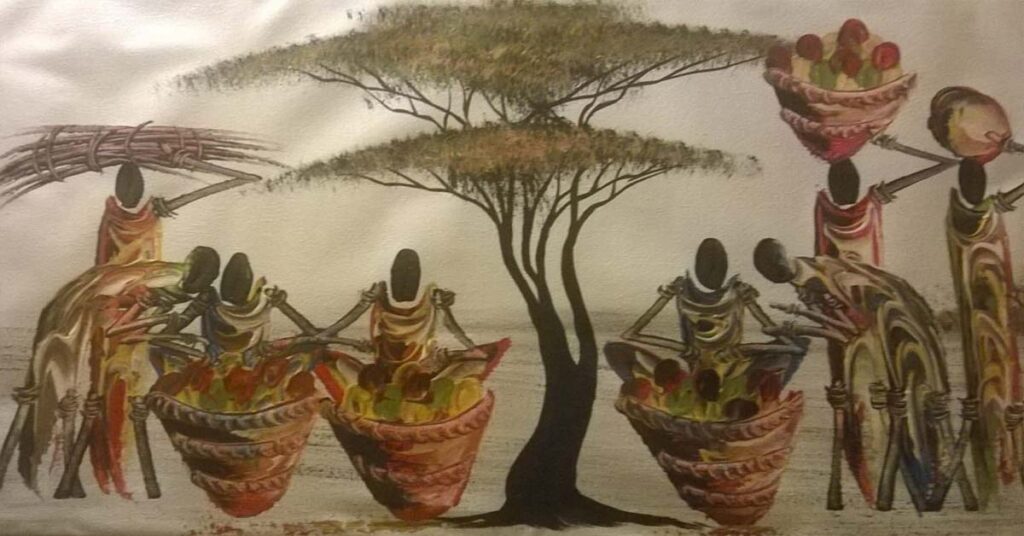


The Masai (originally spelled Maasai) are a Nilotic-speaking pastoralist people living in southern Kenya and northern Tanzania. There are more than one million of them in Kenya, according to the 2019 census, and several hundred thousand in Tanzania, where censuses do not record ethnicity. Livestock is central to their economy and culture. Social life is organized by age groups, ranging from young warriors—the moran—to the elders. Their red shawls and beaded jewelry have made them the most recognizable people in East Africa. Many Masai today combine herding with school, work in the city, and tourism, without giving up their identity.
Where the Maasai live
The Maasai live along the Rift Valley, straddling the border between Kenya and Tanzania. Their traditional territory is called Maasailand and spans both countries.
- In Kenya, they are found primarily in Narok and Kajiado counties, around the Masai Mara Reserve and Amboseli National Park.
- In Tanzania, they live in the Arusha and Manyara regions: in the Ngorongoro Conservation Area, in Loliondo, east of the Serengeti, in the Lake Natron Valley, and on the Great Maasai Steppe, south of Arusha.
Many of the most famous safari destinations, therefore, are also Maasai lands. The names themselves reflect this: Serengeti comes from the Maasai word siringet, meaning “the place where the land stretches endlessly.”
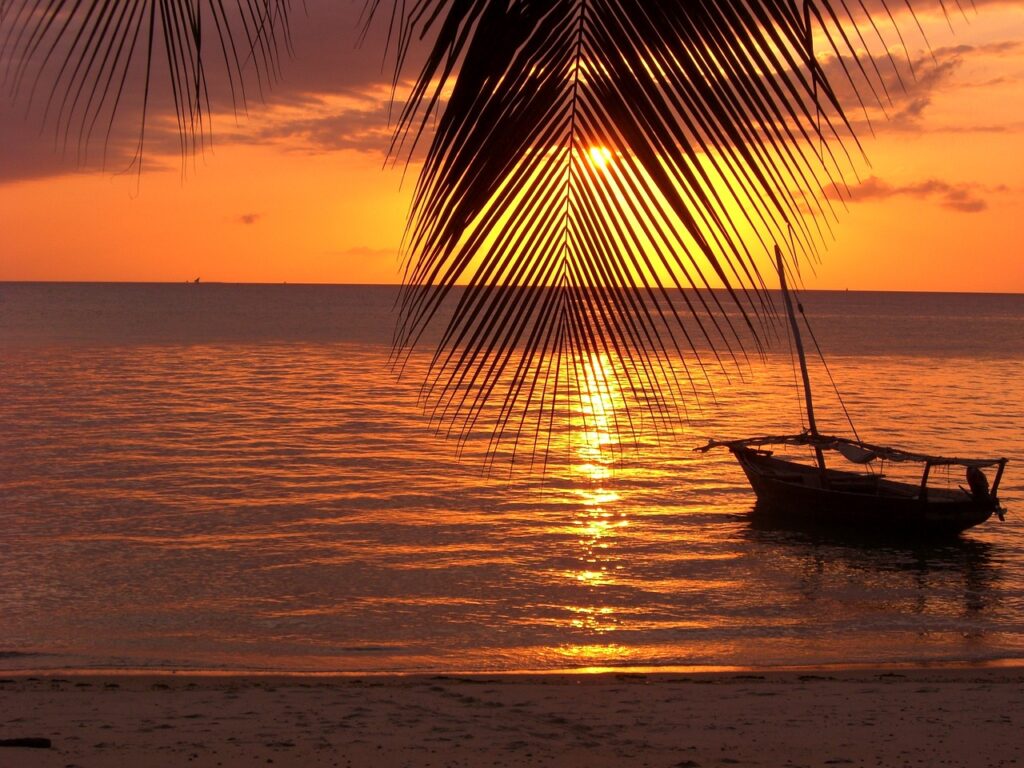
In recent decades, many Maasai have also moved to cities such as Arusha and Nairobi, as well as to the coast. On the beaches of Zanzibar, you often see young Maasai selling handicrafts or working as security guards at resorts. They are not native to the island; they came from the mainland in search of work.
How many Maasai are there
In Kenya, the 2019 census counted just under 1.2 million Maasai. In Tanzania, censuses do not record ethnic affiliation, and estimates put the number at several hundred thousand people. Overall, they are a people numbering over 1.5 million, and their population is growing. Despite their international fame, they represent a small portion of the population in both countries: Tanzania is home to over 120 ethnic groups.
Origins and History
The Maasai take their name from their language, Maa, meaning “those who speak Maa.” According to historians, their ancestors lived in the lower Nile Valley, north of Lake Turkana. Between the 15th and 17th centuries, they migrated south along the Rift Valley, and by the 18th century they controlled a vast territory stretching from central Kenya to the plains of central Tanzania. According to their tradition, the god Enkai entrusted the Maasai with all the livestock in the world. For this reason, in the past, cattle raids on neighboring peoples were considered a way to reclaim what was rightfully theirs.
Between the late 19th and early 20th centuries, epidemics of rinderpest, drought, and smallpox took a heavy toll on the population and their herds. During the same period, the colonial governments—the British in Kenya and the German, and later British, in Tanganyika—seized much of the Maasai’s best land. In the 20th century, the establishment of protected areas further reduced the space available for grazing. The Serengeti became a national park in 1951, and the Maasai who lived there were relocated. In 1959,the Ngorongoro Conservation Area was established, specifically designed to allow herders and wildlife to coexist.
Language, Subgroups, and Mythology
Maa is a Nilotic language, spoken in various dialects by related peoples such as the Samburu of Kenya and the Arusha. The Arusha are Maa-speaking farmers who gave their name to the city and national park of Arusha. Many Maasai also speak Swahili, and younger people often speak English.
The people are divided into territorial subgroups, called iloshon, each with its own pastures, traditions, and sometimes distinctive clothing. In Tanzania, the largest section is the Kisongo, found around Arusha, the Ngorongoro Crater, and the Maasai Steppe. In Kenya, the best-known sections are the Purko, the Loita, and the Matapato. Within these sections, there are clans and subclans linked by paternal descent.
Masai mythology revolves around Enkai (or Engai), a single god with two faces. Enkai Narok, the black god, is benevolent and brings rain. Enkai Nanyokie, the red god, is quick-tempered and brings famine and drought. The sacred mountain is Ol Doinyo Lengai, the still-active volcano near Lake Natron, whose name in Maa means “God’s Mountain.” If you want to say hello, just “Supa!” (“hello”) and “Ashe oleng” (“Thank you so much”).
Livestock at the centre of everything
For a Maasai, livestock are wealth, prestige, food, and currency. Cows are counted, named, and exchanged at weddings. Along with children, they are a measure of a man’s success. Alongside cattle, goats and sheep are raised, as they are more drought-resistant.
The traditional diet consisted of milk, meat, and, on special occasions, blood. The blood is drawn from a vein in the animal’s neck without killing it, and is drunk plain or mixed with milk, especially after childbirth, illness, or circumcision. Today, Maasai cuisine also includes ugali (cornmeal porridge), rice, beans, and very sweet tea. Many families cultivate small plots of land near the village.
Age groups: from children to the elderly
Maasai society is organized by age groups . Approximately every 10–15 years, boys who are circumcised together form a group that will remain united for life, with their own name. There are three main stages for men:
- Boys: They tend goats and calves from a young age.
- Moran (warriors): After circumcision, for several years they are tasked with defending the community and the herds. They wear their hair long and dyed with ochre and live partly apart from the others, in camps called manyatta.
- Elders: After theeunoto ceremony, which marks the end of their time as warriors, the moran shave their heads, are allowed to marry, and, as they grow older, join the council of elders.
The council of elders makes important decisions and resolves disputes according to a body of law passed down orally, in which reconciliation and fines in livestock are valued more highly than punishments. Above them all stands a spiritual figure, the laibon, a healer and diviner. In the past, killing a lion was a test of courage for the moran. Today it is forbidden, and in Kenya some communities have replaced it with athletic competitions, such as the “Maasai Olympics.”
The Maasai warriors: who are the moran?
The moran ( ilmurran in Maa) are young men after circumcision, usually between the ages of 15 and 30. They are the most famous figure of the Maasai people and, in the popular imagination, the quintessential “African warrior.” Their traditional task was to defend the village and livestock from predators and raiders and to participate in raids against neighboring tribes. Today, they guard the herds in distant pastures, often with a cell phone in their pocket.
They are easy to recognize. They have long, braided hair dyed a reddish ochre color, wear lots of beaded jewelry, and carry traditional gear:
- the Maasai spear, with a long iron tip;
- the short sword (seme), in a red leather sheath;
- the Masai staff with a knobbed head (orinka in Maa, rungu in Swahili), which is also used as a throwing weapon;
- in the past, an oval buffalo-hide shield painted in the colors of one’s own section.
During their years as morans, young men learn to endure fatigue and hunger, to know the territory, and to care for the animals. They form very strong bonds with their peers, which will last a lifetime.
Masai Women, Family, and Marriage
Masai women are responsible for milking, fetching water, gathering firewood, caring for the children, and building homes. The homes belong to them: they build and maintain them. They are also the creators of beaded jewelry, which serves as a true visual language. In a traditionally patriarchal society where polygamy is permitted, women have a strong network of solidarity among themselves. In recent decades, they have often been the driving force behind change: craft cooperatives, small businesses, and the fight for their daughters’ education.
Maasai Homes and Villages
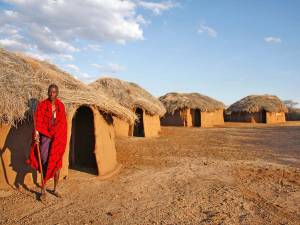
The traditional village,the enkang, is the “boma” of safari stories. It consists of a circle of low huts, called inkajijik, which the women build using a framework of woven branches, covered with mud, cow dung, and ash. The huts are small and dark, with a hearth in the center and beds made of animal skins and branches; the smoke keeps insects away. Surrounding it is a fence made of thorny acacia branches that protects people and livestock from predators. At night, the animals are penned inside the central enclosure.
In the past, the village would move when the pastures ran out. Today, many families are semi-sedentary: they have a permanent base—sometimes with houses made of brick and sheet metal—and move their herds only during the dry season.
Clothing, Jewelry, and the Body
- The shuka. Checkered or solid-colored cotton shukas—especially red ones—became common in the 20th century, replacing the traditional leather garments. According to many Maasai, red symbolizes blood, courage, and strength, and can be seen from a distance on the savanna.
- Beads. Necklaces, earrings, and headbands indicate age, marital status, and tribal affiliation. Married women wear large, flat necklaces.
- Stretched earlobes. The earlobes are pierced and gradually stretched, sometimes down to the shoulders. Today, this practice is less common among young people.
- Hair. Women keep theirhair shaved, while the moran wear theirs long and braided, dyed with ochre.
- The adumu. This is the famous jumping dance. During ceremonies, the young people take turns jumping higher and higher, accompanied by the group’s singing.
Fun Facts About the Maasai
- Spitting as a blessing. Spitting on one’s hand before shaking it, or on a newborn baby, is a gesture of good wishes and a sign of respect.
- Greeting the Elderly. Children bow their heads before the elderly, who greet them by placing a hand on their heads.
- No game hunting. Traditionally, the Maasai do not hunt wild animals for food. This is one reason why, for centuries, they have coexisted with the wildlife that now populates the national parks.
- The name “Masai Mara.” In Maasai, “mara” means “spotted.” It refers to the savanna landscape dotted with trees and bushes.
- Tire sandals. Many Maasai wear sandals made from used tires—extremely sturdy and practically indestructible.
- The Adumu Leaps. In the leaping dance, the most skilled morans leap tens of centimeters off the ground, keeping their bodies straight as a spindle.
- “Masai” shoes. A Swiss footwear company that makes shoes with curved soles drew inspiration from the way the Masai walk barefoot and used that name for its products.
- The number of livestock is kept private. Asking a Masai how many cows or children they have is considered impolite, almost like asking us how much we earn.
The Maasai Today: Between Tradition and Change
Life for the Maasai is changing rapidly. Increasingly frequent droughts, population growth, and shrinking pastures are driving many young people toward school, cities, and new jobs. Many work in tourism: as guides, rangers, and lodge staff, or selling handicrafts as far away as the beaches of Zanzibar. Several communities have established their own conservation areas, where wildlife, livestock, and tourism coexist and generate income.
The issue of land remains a very sensitive one. In the Ngorongoro Conservation Area, where the Maasai have the right to live, the Tanzanian government has been promoting, since 2022, the relocation of residents to other parts of the country, such as Msomera, presenting it as voluntary and necessary for conservation. Human rights organizations and some community members oppose this. The management of the lands in Loliondo, east of the Serengeti, has also been at the center of intense tensions.
Visiting a Maasai village
Many safaris in northern Tanzania include a visit to a Maasai boma, usually along the route to Ngorongoro or the Serengeti. Here’s what to expect and how to make the most of it:
- What to Expect. There are usually songs and a welcome dance, a tour of the huts, lighting a fire with sticks, and a bead market. Some villages are “cultural,” meaning they’re organized specifically for visitors. They aren’t fake, but they are a reenactment: ask your guide what kind of village you’re visiting.
- The fee. Admission is charged per vehicle or per person. Your guides will be able to point out the villages where the fee actually goes to the community.
- Photos. During organized tours, photos are usually allowed. Outside the village, along the roads, always ask for permission, and be prepared to pay a small fee if asked.
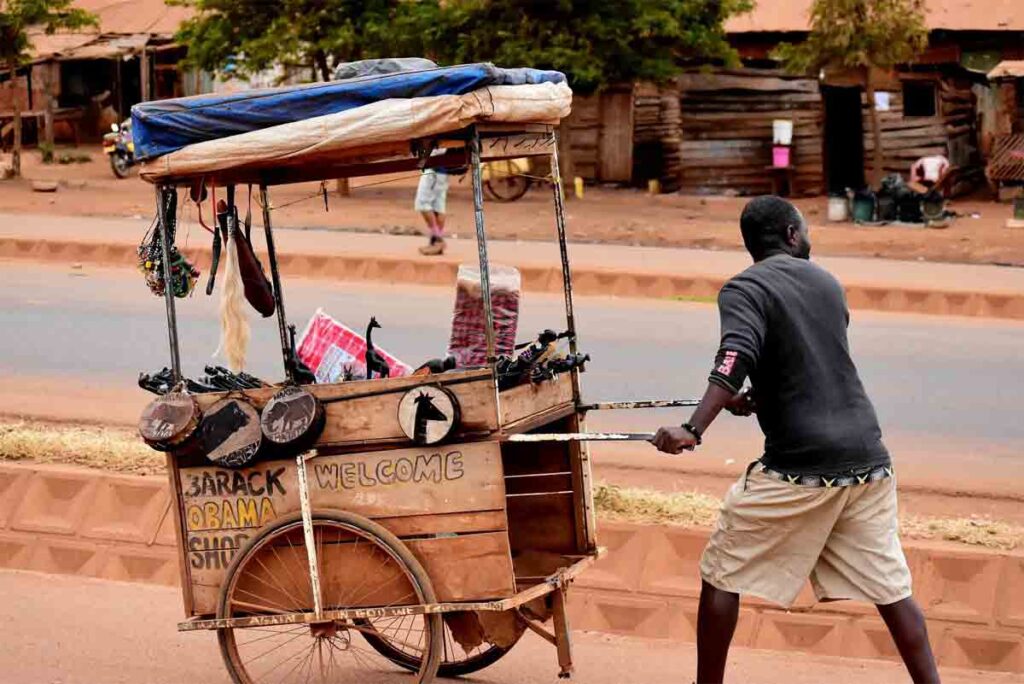
- Shopping. Maasai beads make a beautiful souvenir. Bargaining is part of the fun, but do so in moderation.
You can have a more casual encounter in less touristy areas, or by stopping at Mto wa Mbu, where the herders go to the market every Thursday. To learn about peoples whose way of life is very different from that of the Maasai, the next stop is the Lake Eyasi with the Hadzabe and Datoga.
A traveler’s tale
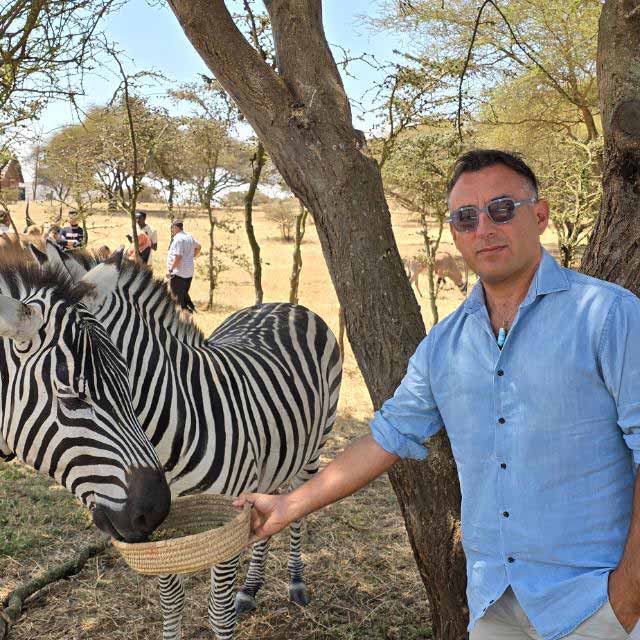
In the video, Piergiorgio Pieroni talks about his safari in Tanzania, from the Serengeti to a visit to a Maasai village.
Frequently Asked Questions about the Maasai People
Where do the Maasai live?
The Maasai live between southern Kenya and northern Tanzania, along the Rift Valley. In Tanzania, they are mainly present in the regions of Arusha and Manyara, around Ngorongoro, Loliondo, and the Maasai steppe.
How many Maasai are there?
In Kenya, the 2019 census counted just under 1.2 million Maasai. In Tanzania, censuses do not record ethnicity, but estimates suggest several hundred thousand people.
Who are the Maasai warriors?
The Maasai warriors, called moran, are young men who have undergone circumcision, usually between the ages of 15 and 30. Traditionally, they defend the village and the livestock. They can be recognized by their long hair dyed with ochre, their beaded jewelry, their spears, and their staffs with knobbed tops.
Are there Masai people in Zanzibar?
Yes, but they are not native to the island. Many young Masai move to Zanzibar from the mainland to work in tourism, either as security guards at resorts or selling handicrafts on the beaches.
What language do the Maasai speak?
The Maasai speak Maa, a Nilotic language from which their name is derived. Many also speak Swahili and—especially the younger generation—English.
Why do the Maasai wear red?
The red of the shuka—the cotton wraps that became widespread in the 20th century—is associated by the Maasai with blood, courage, and strength. It is also highly visible on the savanna. Today, other colors are also worn, such as blue and plaid fabrics.
What do the Maasai eat?
Their traditional diet is based on milk, meat, and, on occasion, blood drawn from livestock without killing them. Today, it also includes corn porridge, rice, beans, and tea.
Can you visit a Maasai village during a safari?
Yes, many safaris in northern Tanzania include a visit to a Maasai village, usually along the road to Ngorongoro or the Serengeti. You pay a contribution to the community and witness songs, dances, and daily life.
Would you like to get to know the Maasai at your own pace, without rushing, and with a guide who bridges two worlds? We offer this in many of our itineraries, and in more depth in our Safari Culture . For a trip tailored to your interests, let’s talk .