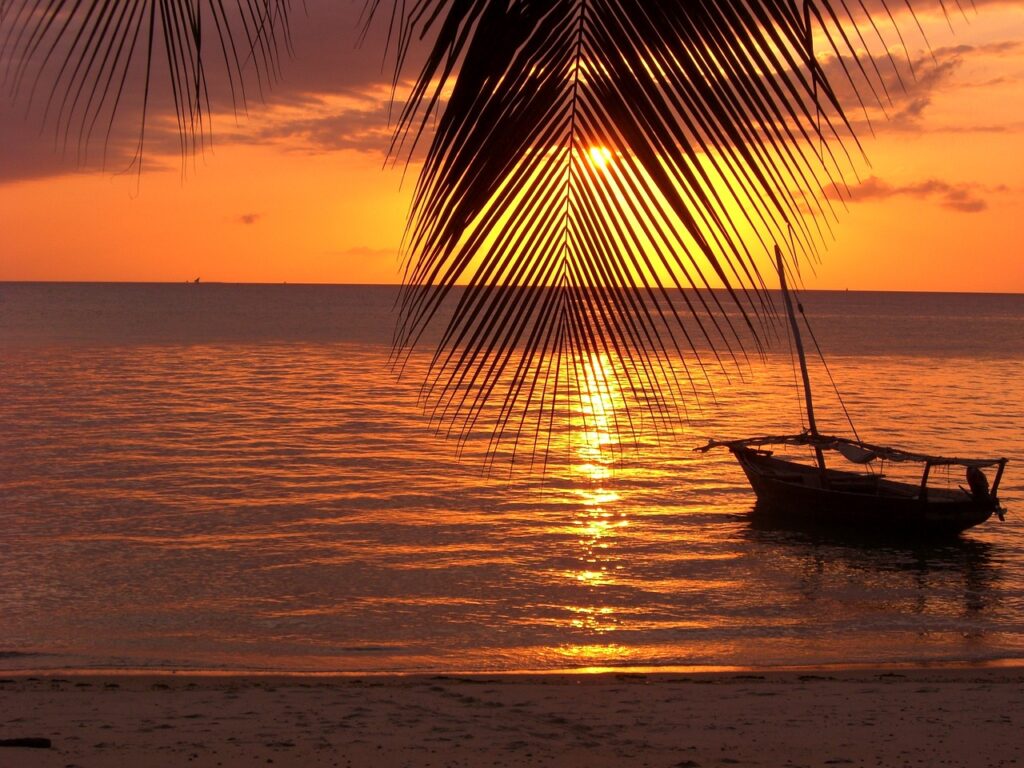


Zanzibar is small, but each stretch of coastline has its own distinct character, and the choice of area completely changes the vacation experience. The deciding factor is something that many people only discover upon arrival: the tides. On the north coast, you can swim almost any time of day; on the east coast, at low tide, the sea recedes hundreds of meters, and you have to wait for it to come back in before you can go swimming.
In short: the north (Nungwi and Kendwa) is the best area for a first trip, for swimming, and for sunsets; the northeast (Matemwe and Kiwengwa) is the area for resorts and snorkeling at Mnemba;the east and southeast (Paje, Jambiani, Bwejuu, Michamvi) are quieter and more authentic; the south is the base for dolphin watching and Menai Bay;the west is Stone Town, a must-see for its history and culture. Below, you’ll also find everything there is to see on the island.
Northern or Southern Zanzibar? The short answer
| If you’re looking for… | Where to go |
|---|---|
| Beaches open for swimming at all hours | North: Kendwa and Nungwi |
| Sunsets over the Sea | North, or Michamvi on the east coast |
| All-inclusive resorts, families | Northeast: Kiwengwa and the surrounding area |
| Snorkeling and Scuba Diving | Northeast: Matemwe, off the Mnemba Atoll |
| Peace and Quiet and Village Life | East and Southeast: Jambiani, Bwejuu, Matemwe |
| Kitesurfing | East: Paje |
| Dolphins and Dhow Tours | South: Kizimkazi and Menai Bay |
| History and Culture | West: Stone Town |
What many people refer to as “the south” for a beach vacation is actually mainly the southeastern coast, from Paje to Jambiani: it’s quieter and less developed than the north, but the tides are much more pronounced. The north is easier for those who just want to enjoy the beach and relax; the southeast is better suited for those who also want to experience the island.
Tides: The Deciding Factor
The island is surrounded by a coral reef and vast, shallow lagoons. In the north, the tides are barely noticeable, and swimming is almost always possible; in the northeast, they are pronounced, with variations from one beach to another; in the east and southeast, they have a very wide range, and at low tide, the lagoon becomes an expanse of sand, pools, and seaweed beds that can be explored on foot.
It’s not a drawback but rather a different experience: every establishment has a daily tide table, and those staying on the east coast quickly learn to plan their swims, walks, and boat trips around the tide times.
The Regions of Zanzibar, One by One
North: Nungwi and Kendwa
The most famous area and the easiest choice for a first trip. The sea is suitable for swimming almost all day long, and with the beaches facing west, the sunsets are the most beautiful on the island. Nungwi is a fishing village that has become Zanzibar’s liveliest resort, with restaurants, bars, shipyards where dhows are still built by hand, and departure points for diving and boat trips; Kendwa, a little further south, has a wide beach and a more relaxed atmosphere.
Ideal for: first-time travelers, those who want to swim at any time of day, and a bit of nightlife.
Less suitable for: those seeking solitude and contact with local life.
Northeast: Matemwe, Kiwengwa, and Pongwe
A long stretch of white-sand beaches protected by a coral reef, where most of the island’s resorts are concentrated, including many Italian-run resorts. Off the coast of Matemwe lies the Mnemba Atoll, the island’s best spot for snorkeling and scuba diving. The tides are significant, but many resorts have swimming pools and piers.
Ideal for: families, those looking for a resort with all the amenities, and snorkeling enthusiasts.
East and Southeast: Michamvi, Bwejuu, Paje, and Jambiani
The most authentic and laid-back side of Zanzibar. At low tide, the lagoon fills with women working in the seaweed farms: a sight that captures village life. Paje is the kitesurfing capital, with a youthful vibe; Bwejuu and Jambiani are quieter, with long beaches and few accommodations (we’ve dedicated an entire guide to Jambiani). At the tip of the Michamvi Peninsula, on the side facing Chwaka Bay, you can watch the sunset over the sea and even go for a swim at low tide.
Ideal for: couples, those seeking peace and quiet, kitesurfers, and those who want to experience village life.
Less suitable for: people who want to swim at any time of day.
South: Kizimkazi
The southern part of the island is less developed for beach tourism, but it serves as the starting point for dolphin-watching boat tours and excursions to Menai Bay. It’s an area best visited as a day trip rather than as a place to stay, except for those seeking secluded accommodations.
West: Stone Town
The old town, a UNESCO World Heritage Site, is the historical and cultural heart of the island. It’s not a beach resort, but spending a night or two here—upon arrival or before departure—is the best way to learn about Zanzibar’s history. We’ll discuss this in more detail below.
What to See in Zanzibar
The individual beaches—including their features, tides, and who each one is best suited for—are described in our guide to Zanzibar’s most beautiful beaches. Here, however, we’ll explore all the places on the island that you absolutely can’t miss!
Stone Town
Narrow alleys, carved doors, spice markets, the Slave Memorial next to the Anglican Cathedral, the Arab Fort, and the evening street food market in the Forodhani Gardens. It’s the must-see cultural stop on any trip to Zanzibar, and it requires at least a full day. All the places to visit are listed in our guide to Stone Town.
Jozani National Park
The island’s last major forest, in the central-southern part of the island, is the best place to see the Zanzibar red colobus up close, a monkey unique to this area. A wooden walkway also crosses the mangroves of Chwaka Bay. The visit lasts a couple of hours and can easily be combined with a transfer to the east coast.
Spice Tour
Zanzibar is the “spice island,” and a visit to a plantation inland from Stone Town allows you to see how cloves, nutmeg, cinnamon, vanilla, pepper, and cardamom are grown, sampling tropical fruits along the way. In the same area are the Kidichi Persian Baths, built in the mid-19th century for the sultan.
The Mnemba Atoll
, a marine protected area off the northeast coast, is the island’s best spot for snorkeling and diving: crystal-clear waters, coral reefs, sea turtles, and often dolphins. It can be reached by boat from Matemwe or Nungwi.
Menai Bay and the Kizimkazi dolphins
In the south, Menai Bay is a marine conservation area where classic day trips by dhow take place, including snorkeling, sandbanks, and a seafood lunch on an island. Dolphin-watching trips depart from Kizimkazi: it’s best to choose operators who don’t chase or surround them with boats.
Prison Island and the Nakupenda Sandbank
Two half-day trips from Stone Town: Prison Island (Changuu), famous for its giant tortoises, and Nakupenda , a white sandbank that emerges at low tide in the middle of the ocean, perfect for snorkeling and lunch on the sand.
The restaurant on the Pingwe rock
On the Michamvi Peninsula, a restaurant built on a rock in the middle of the sea has become one of the island’s most photographed spots: it can be reached on foot at low tide and by boat at high tide. Reservations must be made in advance.
Caves and Historic Sites
North of Stone Town lie the Mangapwani Caves, a natural coral cave and a chamber carved into the rock that was used to hide slaves after the official abolition of the slave trade, as well as the ruins of Maruhubi Palace, the former residence of Sultan Barghash. On the southeast coast, near Jambiani, the Kuumbi Caves are considered sacred by local communities.
Village life and seaweed farming
On the east coast, at low tide, you can walk in the lagoon and see women working in the seaweed farms; in Paje, a cooperative processes the seaweed into soaps and cosmetics. Village visits with a local guide are the best way to get to know the Zanzibar beyond the resorts.
How many days do you need, and how should you plan them
?
You’ll need at least 5–7 days for Zanzibar, especially if your stay follows a safari. A plan that works well:
- 1–2 nights in Stone Town, upon arrival or before departure, to explore the old city and take the spice tour;
- 4–5 nights in a beach area, chosen based on your priorities: the north for swimming and sunsets, the east for tranquility;
- 1–2 daytrips: Jozani, Mnemba, Menai Bay, or Prison Island.
If you have more time, you can split your beach stay between two coastlines—for example, a few nights in the north and a few nights in the east.
Italian resorts or local accommodations?
Resorts managed by Italian operators are located mainly along the north and northeast coasts: they offer entertainment, Italian cuisine, Italian-speaking staff, and organized excursions. They’re ideal for first-time visitors and families. The alternative is international resorts, boutique hotels, and small, locally managed lodges, which are more common along the east and southeast coasts: fewer standardized services, more atmosphere, and a more direct connection to the island.
Where to Go on Your Honeymoon in Zanzibar
The best areas for a honeymoon are Michamvi, for its sunsets and tranquility; Kendwa, for its consistently swimmable waters; and the small, romantic lodges along the east coast; those seeking exclusivity will find private islands and lodges on the Mnemba Atoll, though at significantly higher prices. The most popular option remains a honeymoon combining the savanna and the ocean, with a few days in the national parks before heading to the beach. Those looking for even more secluded islands can consider Pemba or Mafia.
Practical Tips
- Getting Around: The main beach areas are about an hour’s drive from the airport and Stone Town; Nungwi and Kendwa take a little longer.
- When to go: The best months are June through October and December through February; April and May are the rainiest. Month-by-month details are in the guide to the island’s climate and seasons.
- Rock-pool shoes: essential along the coast at low tide, to protect against sea urchins and coral.
- Clothing: In the villages and in Stone Town, clothing that covers the shoulders and knees is required.
- Entry requirements: In addition to a visa for Tanzania, mandatory health insurance is required, costing approximately 44 USD per person. Full details are available in our guide to travel documents for Tanzania and Zanzibar.
Frequently Asked Questions
What is the most beautiful area in Zanzibar?
It depends on the kind of vacation you’re looking for. The north, with Nungwi and Kendwa, is the best area for swimming at any time of day and watching the sunset; the northeast is best for resorts and snorkeling at Mnemba; and the east and southeast, with Paje, Jambiani, and Michamvi, are ideal for tranquility and village life.
Is the north or the south of Zanzibar better?
The north is better for a beach vacation and relaxation, because the tides aren’t very noticeable and the sea is suitable for swimming almost all the time. The southeast is quieter and more authentic, but the tides are much more pronounced: to go swimming, you’ll need to check the high tide schedule.
What to see in Zanzibar?
The main stops are Stone Town, Jozani National Park with its red colobus monkeys, a spice tour, snorkeling at Mnemba Atoll, Menai Bay, Prison Island, and Nakupenda Sandbank.
How many days do you need for Zanzibar?
At least 5–7 days: one or two nights in Stone Town, four or five nights in a seaside area, and one or two day trips.
Still undecided between north, east, and south? Tell us how you imagine your days at the beach (swimming at any time, exploring the lagoon, going out at night, or not seeing anyone) and we’ll suggest the perfect area. You can start with our itineraries with a few days at the beach in Zanzibar or describe your ideal vacation .