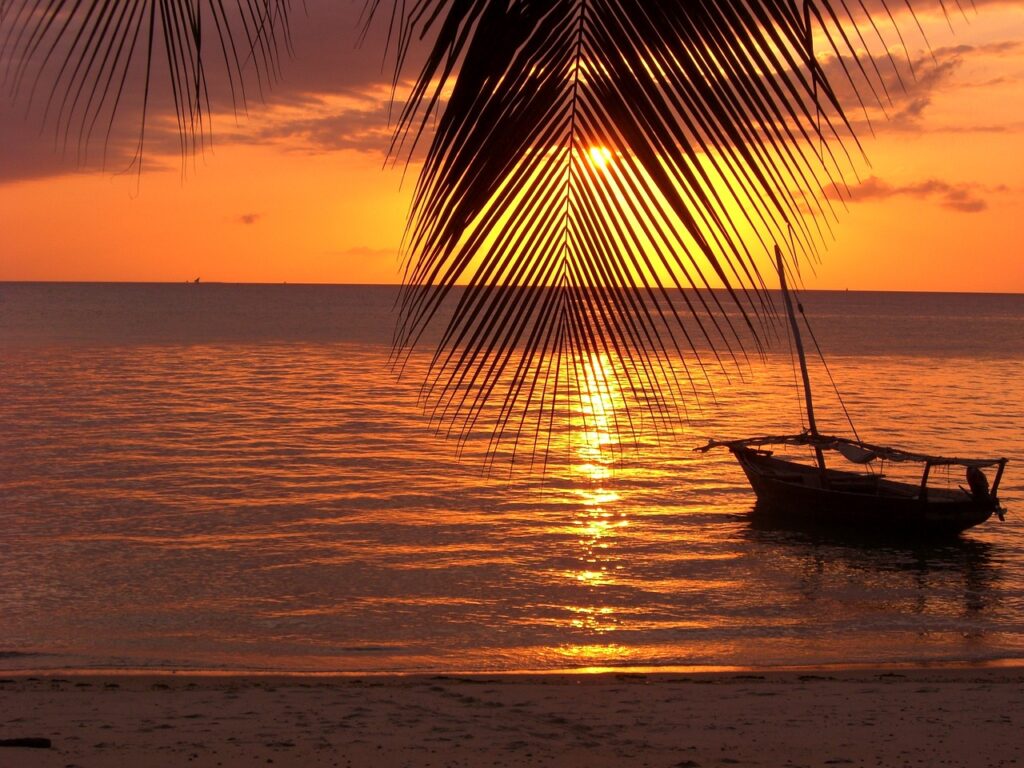


Zanzibar has dozens of kilometers of white-sand beaches and waters ranging from turquoise to emerald green, but not all the beaches are the same. The tides make all the difference: at some beaches, you can swim at any time of day, while at others, at low tide, the sea recedes hundreds of meters, and you have to wait for it to come back in before you can go for a swim.
If you’re looking for a quick answer: Kendwa and Nungwi, in the north, are the best beaches for swimming at any time of day and watching the sunset; Matemwe is the most beautiful for snorkeling, facing the Mnemba Atoll; Paje and Jambiani, on the east coast, are the most authentic and the ideal base for kitesurfing; Michamvi combines the tranquility of the east coast with sunsets over the sea. Below you’ll find them all, one by one.
Before you choose: how the tides work
The island is surrounded by a coral reef and large, shallow lagoons, and the effect of the tides varies greatly from one coast to the other:
- north: the tides are barely noticeable, and swimming is almost always possible;
- Northeast: pronounced tides, with variations from one beach to another;
- east and southeast: very wide tidal ranges. At low tide, the lagoon becomes an expanse of sand, pools, and seaweed beds to explore on foot; at high tide, the sea returns all the way to the shore.
Every establishment has a daily tide chart: those staying on the east coast quickly learn to plan their swims, walks, and boat trips around the tide schedules.
The northern beaches
Kendwa
For many, it’s the most beautiful beach in Zanzibar: wide, with fine sand, and crystal-clear water suitable for swimming practically at any time of day, since the tidal effect is minimal here. Facing west, it offers spectacular sunsets over the ocean. The atmosphere is relaxed during the day and livelier on some evenings, with beach parties.
Ideal for: those who want to swim without worrying about the tides, couples, and first-time visitors to Zanzibar.
Nungwi
At the northern tip of the island, Nungwi is a fishing village that has become Zanzibar’s liveliest resort, with restaurants, bars, and departure points for boat trips and diving excursions. The sea is deep and suitable for swimming almost all day long, and here you can still see the shipyards where dhows, the traditional boats, are built by hand. In the village, a small natural aquarium is home to sea turtles.
Ideal for: those looking for nightlife, restaurants, and water activities.
Less suitable for: those looking for peace and quiet and deserted beaches.
The Beaches of the Northeast
Matemwe and the Mnemba Atoll
Matemwe is a long, white, quiet, and largely undeveloped beach, featuring a fishing village and a view of Mnemba Island. Its main attraction isthe Mnemba Atoll, a marine protected area just a few minutes away by boat, considered one of the best spots on the island for snorkeling and diving: crystal-clear waters, coral reefs, sea turtles, and often dolphins. At low tide, the water recedes significantly, so swimming should be planned accordingly.
Ideal for: snorkeling, diving, and those seeking tranquility.
Kiwengwa and Pwani Mchangani
This is the coast of the large resorts, including many resorts popular with Italians. The beach is long and white, protected by a coral reef; the tides are pronounced, but many resorts have swimming pools and piers. It’s a convenient area for families and for those who want all amenities close at hand.
Pongwe
A small beach with palm trees and coves, located a little further south, considered by many to be one of the most picturesque on the island. It is quiet and has few amenities, making it ideal for those seeking a secluded getaway.
The beaches of the east and southeast coasts
Michamvi
At the tip of the Michamvi Peninsula, on the side facing Chwaka Bay, lies one of the few beaches on the east coast where you can watch the sunset over the sea and swim even at low tide. On the same peninsula, in Pingwe, there is the famous restaurant built on a rock in the middle of the water, accessible on foot at low tide and by boat at high tide.
Ideal for: couples and honeymooners, those seeking tranquility and sunsets.
Bwejuu and Dongwe
One of the island’s longest and most scenic beaches, with pristine white sand, palm trees, and very few people. Off the coast of Dongwe lies the so-called Blue Lagoon, a shallow lagoon ideal for snorkeling, even for beginners.
Paje
Paje is Zanzibar’s kitesurfing capital: the shallow lagoon and steady winds for most of the year make it perfect for learning. The atmosphere is young and laid-back, with beach bars and kitesurfing schools. At low tide, the water recedes significantly, and the sea constantly changes color.
Ideal for: kitesurfing, young travelers, and those looking for a laid-back atmosphere.
Jambiani
A string of villages stretching along about six kilometers of beach, where local life unfolds right before your eyes: women working in the seaweed and sponge farms, fishermen returning in their dhows, and children playing on the shore. The tides have a very wide range, and tourism is fairly low-key. Everything there is to see is in our guide dedicated to Jambiani.
Ideal for: those seeking authenticity and a slow pace of life.
The South and the Small Islands
Kizimkazi and Menai Bay
In the south of the island, Kizimkazi is the starting point for boat trips to see dolphins, which live year-round in these waters: it’s best to choose tour operators who do not chase them or surround them with boats. The nearby Menai Bay, a marine conservation area, is the destination for full-day dhow excursions, featuring snorkeling, sandbars, and a seafood lunch on an island.
Not far away, the small bay of Mtende is one of the island’s most secluded beaches, with crystal-clear water nestled among the rocks.
Nakupenda and Prison Island
Off the coast of Stone Town, the Nakupenda sandbar emerges at low tide in the middle of the ocean: it’s one of the most popular half-day excursions, featuring snorkeling and lunch on the sand. Nearby is Prison Island (Changuu), famous for its giant tortoises. Both can be reached by boat from Stone Town, which is worth at least a day’s visit—we cover this in our guide to what to see in the Old Town.
A Comparison of the Beaches
| Beach | Coast | Tides | Highlights |
|---|---|---|---|
| Kendwa | North | Lows | Swimming at any time, sunsets |
| Nungwi | North | Read | Nightlife, boat trips, dhow shipyards |
| Matemwe | Northeast | Highlights | Mnemba Atoll, snorkeling and diving |
| Kiwengwa | Northeast | Featured | Resorts, amenities, families |
| Michamvi | East (bay side) | More modest | Sunsets; swimming even at low tide |
| Bwejuu and Dongwe | East | Wide | Long, deserted beach, Blue Lagoon |
| Paje | East | Very spacious | Kitesurfing, youthful atmosphere |
| Jambiani | Southeast | Very large | Village life, tranquility |
| Kizimkazi | South | Marked | Dolphins, Menai Bay |
Where to Stay: Which Area to Choose
- First trip, wanting to swim all the time: Kendwa or Nungwi.
- Families and all-inclusive resorts: Kiwengwa and the northeast coast, where there are also many villages run by Italians.
- Snorkeling and diving: Matemwe, off Mnemba, or Nungwi.
- Peace and quiet and local life: Jambiani, Bwejuu, or Matemwe.
- Kitesurfing: Paje.
- Honeymoon: Michamvi, Kendwa, or a small lodge on the east coast.
A good compromise, if time allows, is to split your stay between the two coasts—for example, a few nights in the north and a few nights in the east—and add a night in Stone Town upon arrival or departure.
Zanzibar’s Coast for a Honeymoon
Zanzibar is one of the most popular honeymoon destinations for Italians, especially when combined with a safari. The itinerary we most often recommend is a honeymoon that combines the savanna and the ocean: a few days in the northern parks, followed by relaxation on the beach. For those seeking even more secluded islands, there’s Pemba—lush and virtually untouched by tourism—and Mafia, famous for its whale sharks.
Practical Tips for the Beach in Zanzibar
- When to go: The best months for the beach are from June through October and from December through February; April and May are the rainiest. For a month-by-month breakdown, see the guide to the island’s climate and seasons.
- Rock-pool shoes: a must-have on beaches at low tide, for sea urchins and corals.
- Sun: Near the equator, the sun is very strong even when the sky is partly cloudy; high-SPF sunscreen and a T-shirt for snorkeling will help prevent sunburn.
- Beach vendors: On the most popular tourist beaches, they are numerous and can sometimes be pushy. A polite but firm “no, asante” is usually enough.
- Clothing: Swimwear is acceptable on the beach and at resorts; in the villages and in Stone Town, clothing that covers the shoulders and knees is required.
- Mandatory Insurance: To enter Zanzibar, you must have the archipelago’s health insurance, which costs approximately 44 USD per person. Visa and document requirements are explained in our guide to entering Tanzania and Zanzibar.
Do you already have your dream beach in mind, or are you still undecided between the north and the east? Tell us how you imagine your days at the beach, and we’ll suggest where to stay: you can start with our itineraries that include a few days at the beach in Zanzibar, or tell us about your ideal vacation.