

If you are planning a safari in Tanzania or thinking about what is the best time to visit this beautiful African land, there is a phenomenon that you should first know carefully so that you can choose the best date to leave.
I am of course talking about the spectacular Great Migration, a huge migratory phenomenon also known as“wildbeest migration,” or wildebeest migration, the animal most involved.
What is the Great Migration?
This term is used to define one of the largest annual migratory phenomena in the world, which is the movement of entire herds of herbivorous animals, belonging to the African fauna, as they move in search of lush pastures in a route that starts in Serengeti National Park, passes through many other Areas and Reserves, and finally returns to the Serengeti.
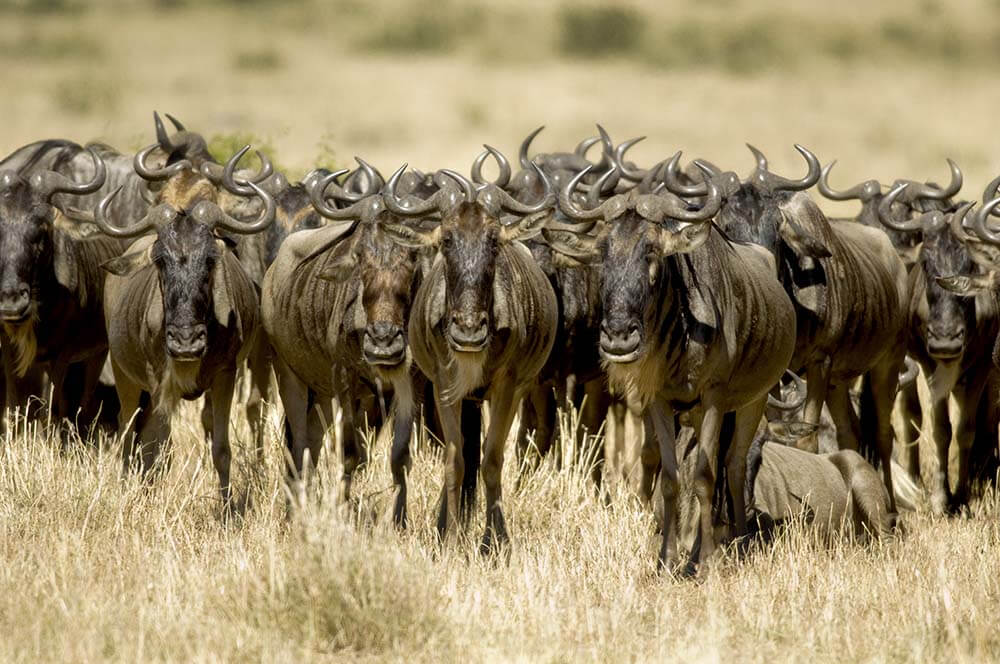
Once the months of October and December known as the small rainy season (short, sporadic downpours, the Vull) have passed, the wildebeests are ready to begin their long journey, despite the fact that ravenous crocodiles and lions are always lurking in the rivers hunting for new prey. During this huge migratory phenomenon, wildebeests:
- they accomplish as much as 800km per year, reaching as much as 80km per day, and migrate to combat the dry period by heading north to south from October to November and then moving west and returning north from April until June
- migrate in search of new pastures to breed or give birth, but most importantly, water and food to survive
- females to give birth to their pups by migrating favor the growth of the fresh, nutritious grass they need typical of these lowlands: half a million births are recorded each year
- Through their feces and by trampling the ground with their hooves, wildebeests contribute to a turf turnover
- especially in the south between the Ngorongoro Plans and the southern Serengeti the volcanic tuff soil and subsoil is a very fertile and tender soil for wildebeests because it is rich in minerals such as granite, calcium, potassium and sodium carbonate and which pregnant females need to feed on during the lactation period
[/vc_column_text][vc_single_image image=”6715″ img_size=”medium” alignment=”center” title=”Book the Great Migration safari tour from August to September”][vc_column_text]
What areas does it affect?
The phenomenon of the Great Wildebeest Migration takes place between the Masai Mara on the border with Kenya, the Ngorongoro Conservation Area and Serengeti Park, the starting and ending point of the march that can be immortalized in both summer (July to September) and winter (December to March).
A world-famous phenomenon that has been going on for millions of years, every year a destination for many tourists from all over the world (estimated 90,000/year).
The wildebeest migration map
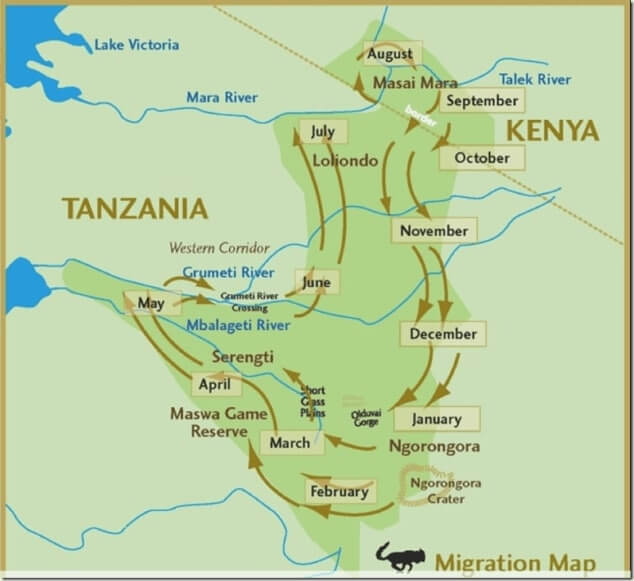
When to see the Great Migration?
To witness the great migration in Tanzania I would personally advise you to go there during these months of the year:
- between June and September: during this period you can see thousands of wildebeest migrating westward (Grumeti) and then northward (Bologonja) via the Mara River that borders Kenya. Back to the north they conclude their journey by facing the most ‘difficult test of migration: passing through the Mara River that borders Kenya, in which huge Nile crocodiles camouflage themselves.
- lateDecember through March: near Ndutu and Masek lakes in the Ngorongoro Conservation Area, in the month of February known as calving season you can see numerous colonies of animals preparing for breeding and calving (although in March the big rainy season begins).
- April to May: after weaning, which is completed by the end of April, newly born pups also participate in transhumance.
- for the more daring, from May to June, on the other hand, it is possible to witness the fording phenomenon: predators remain hidden in the water waiting to catch the prey of the day. During this period, wildebeests move south crossing the Grumeti River called the Western Corridor (Western Serengeti) about 40 km long that flows into Lake Victoria.
- Some of the phenomenon can also be witnessed from October to November. With the onset of the small rains, they return to the northern Mara Triangle region heading for Lobo/Klein’s Valley (northeastern Serengeti) via the Maasai Mara Game Reserve and the Mara River where they stop to graze.
What are the animals involved?
Although the best time to visit Tanzania is the long dry season, which traditionally corresponds to our summer (July-August-September) because it does not rain in fact the weather is cool and the weather always clear.
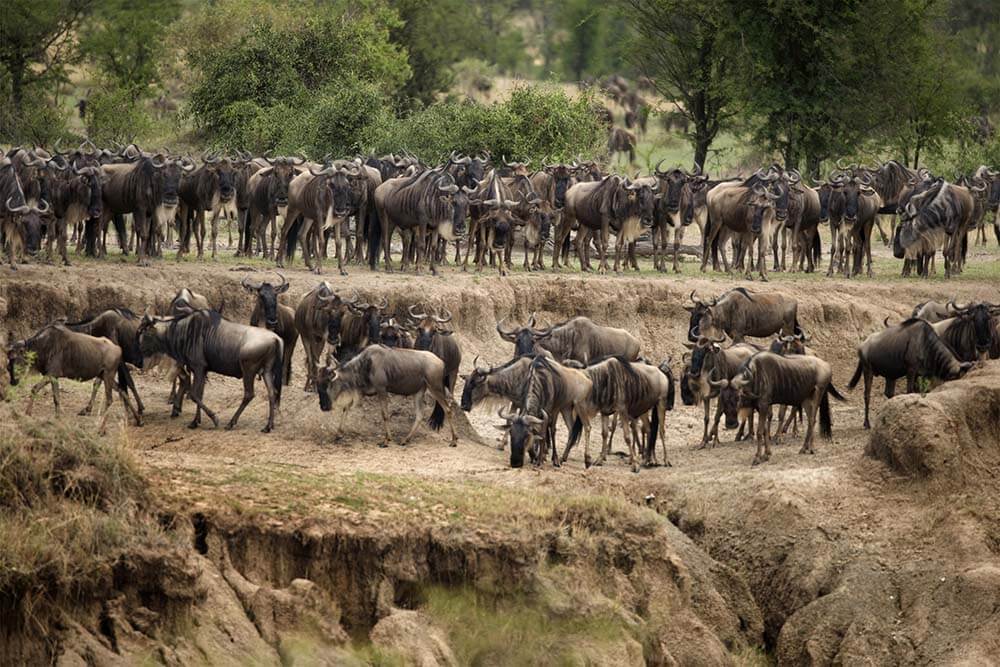
The main animals involved in the most copious transhumance on Earth are:
- 2mln wildebeests, 300,000 zebras, followed by 400,000 Thomson’s gazelles.
- Wildebeest and zebra dominate the scene in greater numbers between the months of June and October; but so do gazelles, which migrate from the southern Serengeti in April to water along the rivers of the Seronera Valley in the central Serengeti, where you may encounter plenty of lions, cheetahs and hyenas.
- Only 3 of the Big Five, or the largest animals in the savannah: elephant, rhinoceros and black buffalo. The lion and leopard live in the territory because they are not migratory animals, but sedentary in fact they travel a maximum of 15 km in their movements.
- Resident and nonmigratory herbivorous animals and mammals.
If you’ve been itching to visit these magical African lands and witness this mammoth migration live, you can book one of our special migration safaris!