

When we talk about Tanzania and think of it as a tourist destination, we almost never refer to Dar es Salaam, considered to date to be its largest and richest city: perhaps because, being a predominantly commercial city, it is thought to have little to offer from a tourist point of view compared to Dodoma and other parts of this African country.
However, Dar es Salaam is a city that deserves a lot and has a lot of potential, both historically and economically, as well as culturally and socially: consider, for example, the fact that in this city you can visit several museums and buildings of great historical importance, such as the National Museum and the House of Culture, and several seaside resorts such as Bongoyo Island (which is also a tourist reserve).
Let’s take a look at its history, its geographical location, the most interesting districts and areas (not only from a tourist point of view, but also economically), and the aspects to be taken into account to avoid risks or dangers.
Is Dar es Salaam dangerous?
Those who decide to embark on such a long journey to a tourist destination such as Tanzania will certainly want to know whether the place they’re about to visit is safe or dangerous, from several points of view: indeed, especially when going on vacation, it’s quite normal to want to ensure a peaceful and tranquil sleep, and not to stress too much about the dangers you could face.
The greatest dangers, the ones we fear the most, can in fact be twofold: one concerns seismic risk (no one likes to think of going on vacation in a place where an earthquake might occur) and the other relates to crime.
Starting with the first danger, we can say that Dar es Salaam is part of a state considered to be an active seismic zone, which means that the risk of earthquakes is present, albeit relatively limited (and in any case unpredictable); in addition, during the months of November to May, there are heavy rains and cyclones, which can lead to flooding and landslides (and, consequently, also damage to infrastructure). It’s always a good idea to check weather forecasts and local authority guidelines.
As far as crime is concerned, it’s true that certain areas of Tanzania (and in particular certain districts of Dar Es Salaam, such as the Masaki, Msasani Peninsula and Oysterbay areas) are more exposed to muggings and robberies, but you just need to be more careful and controlled, avoiding certain situations that could put you in danger: for example, it’s advisable not to carry too much cash, not to travel alone or stay in isolated places, especially at night, and to avoid being driven around by strangers (always prefer official cabs for your journeys).
See also Tanzania safety guide.
The history of Dar es Salaam
Originally known as Mzizima, a name that was officially changed in 1866, Dar es Salaam is Tanzania’s largest and most important city, both commercially and economically, and in terms of the country’s administrative functions, which are still carried out there today.
Formerly the capital of Tanzania, it was replaced in 1996 by Dodoma, a project begun in 1973 but completed some twenty years later (although, as noted, the city continues to be the seat of many administrative functions).
Having been a colonial town (there are traces of settlers from a region of Somalia, Brava, who lived mainly from agriculture and fishing), it still retains many features and various aesthetic aspects). It was not under Portuguese rule, but was controlled by Germany after the Second World War. Berlin Conference of 1885: it was at this time that it became the capital (in 1891), not least because of its particular strategic location and the fact that it has a large port conducive to industrial development). Subsequently, it was also controlled by the British administration (when German East Africa was conquered by the UK), continuing to maintain its key commercial and administrative role until the Second World War, when its growth became even more significant until 1973, when plans began to move its capital role to Dodoma.
Geography of Dar es Salaam
Located in the center of Tanzania’s east coast, facing the strip of sea that links Zanzibar to the island of Mafia, Dar Es Salaam overlooks the warm waters of the Indian Ocean and is characterized mainly by a tropical climate that is hot and humid for much of the year. As in the rest of Tanzania, there are two rainy seasons: the long rainy season, between April and May, and the short rainy season, between October and November.
The economy
We have already mentioned that Dar es Salaam is the most important commercial center in Tanzania. This is mainly due to two factors: the first is its level of industrialization, which is quite high compared to the rest of the country; the second is due to the fact that its port was very important under the various colonial administrations and still is today, since it is used for the transit of goods from both the Tanzanian hinterland and other regions.
Neighborhoods and zones
This city is not very different from other parts of Africa in terms of the great contradictions that inhabit it: indeed, there are very well organized districts, also economically and commercially, alongside which are often very poor and disorganized parts of the city. Despite this, the contrasts and contradictions are less pronounced than in other cities such as Nairobi, where the poor districts are very much like shantytowns.
However, as we’ve said, some parts of the city are more prone to crime, so we need to be very careful.
Society and culture
The population will reach 5,401,814 in 2020, with an annual growth rate of 4.3%, due both to immigration, which is massive here, and to the high birth rate.
As this is the city with the greatest development on various levels (cultural, social, economic, administrative), the conditions in which people live are not very low, on the contrary: the poverty level (even in the less affluent areas) is significantly lower, as are literacy levels and employment rates. All these aspects contribute to making this city one of the best in Tanzania.
However, this does not mean that it is without negative aspects: poverty is always present, all the more so as, although employment levels are high, it is still difficult to maintain a good standard of living as wages are not sufficient and, what’s more, immigrants find it hard to find decent work. What’s more, the city is often subject to water and electricity cuts, and transport is not adapted to the needs and demands of the population.
Tourism
Interesting as a transit point for those on safari in Tanzania or Zanzibar, the town enjoys good tourist appeal, not least for its proximity to the Saadani, Mikumi, Udzungwa, Ruaha and Selous parks, but also for the presence of monuments and museums of historical interest. These include the National Museum, which exhibits archaeological finds from the famous Olduvai excavations, Old Boma, St. Joseph’s Metropolitan Cathedral (Dar’s main church) and Azania Front Lutheran Church.
The giant rat training center for landmine detection, called Apopo, is open to tourists and can be visited.
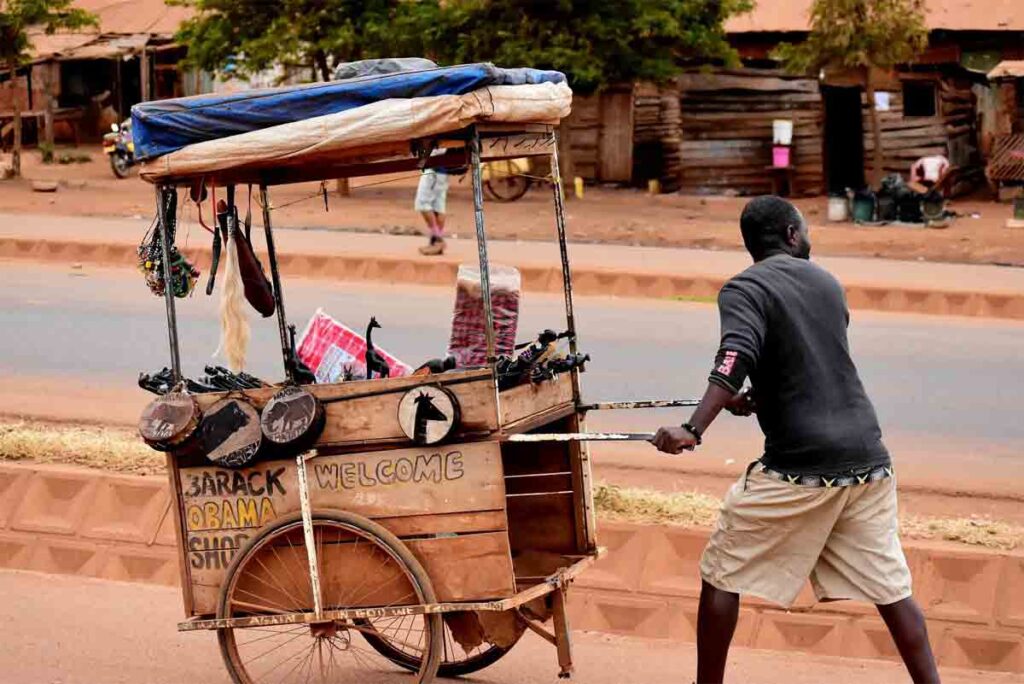
There are many local craft markets, such as those where you can find ebony objects, and the local culinary culture is characteristic, which can be enjoyed in several neighborhood markets as well as in local restaurants where you can taste real delicacies such as a particular type of roast called nyama choma, mishkaki, a variant of kebab.
Infrastructure and transport
Although the number and variety of transport services are not yet sufficient to meet all the needs of the city’s inhabitants, it is nevertheless very well served, both in terms of rail lines and bus services linking it to other nearby centers.
Although there are a number of private cabs, they are also particularly expensive, which is one of the reasons why we prefer another type of public transport that connects the different districts of the city and consists of a kind of collective cab on a van called a daladala.
Telephone: +39 380 253 1425
E-mail: info@safariavventura.com