

Safety, what not to bring, diseases, animal attacks, crime. What to look out for
Going on vacation to an exotic, faraway place can bring joy and euphoria, but it can also give rise to anxiety.
It’s understandable to have fears about your safety when you find yourself in a place with a culture different from your own. It’s normal to fear for your safety in a place with a different culture. Not knowing the streets, habits and lifestyles of the locals, you may be more vulnerable to danger.
Unfortunately, danger is always present, whether you’re going on vacation or simply walking your dog close to home. There’s no need to be overly concerned about your safety. There are many systems and tricks that can be very useful.
The rules of common sense still apply, whether at home or away. It’s understandable to be frightened when walking the streets thousands of miles from home. Especially when you hear about attacks, robberies and hold-ups on defenseless tourists.
However, it’s important not to confuse the two. It’s better to be astute and well-prepared, so as to be able to face up to the dangers in the right way.
In fact, when we talk about dangerousness and safety, we sometimes get confused. The dangers that can be encountered in a remote location are not only those related to possible theft. So it’s always useful to know just how dangerous a place can be. You should also take into account any other risks you may encounter, to make sure you can avoid them.
That’s why, in this article, we want to draw your attention to other aspects. We’d also like to suggest and provide recommendations on what not to bring. The same applies to safe places to visit, common illnesses, animal attacks, crime and local hazards.
Is it dangerous to go to Tanzania? General safety
In general, Tanzania is not as dangerous as you might think. Here, as in any other part of the world (including Europe), robberies and hold-ups can occur. Especially in tourist areas, such as those close to monuments and squares, or markets frequented by tourists.
As is the case in every corner of the world, some areas are safer than others. We therefore recommend that you make a specific, precise plan for your trip to Tanzania. This will enable you to find out in advance which places are safest to visit. Note that although Tanzania is generally safe, there are risks of attacks, robberies and pickpocketing everywhere.
The main risks are often in the poorer areas of the cities, such as Masaki, Msasani and Oysterbay in Dar Es Salam. When visiting these areas, please exercise caution, avoid jewelry and limit the amount of cash you take with you.
If you must travel, avoid doing so on foot, especially alone, in isolated streets. At night, it is particularly inadvisable to visit beaches.
Take the bus or shared cabs instead. If you must take a cab, make sure it has an official license. Better still, try to book it directly from the hotel.
What not to bring
Some things have limited use in Tanzania. Many others cannot be taken home. It would be an offence, but also a lack of respect for the place where you are on vacation.
However, we can give you a few tips on what you can pack for Tanzania.
First and foremost, you’ll need summer clothing. The climate in this region is always mild and relatively warm, with temperatures never dipping below 20 degrees. Even during the rainy season.
Don’t forget to bring a windbreaker (or a sweater or long-sleeved T-shirts for the evening). Also bring sunscreen, lip balm, medication and sunglasses.
In addition (at least for safaris), a soft suitcase will be more practical when transported by car during excursions.
In Tanzania, the use of plastic bags is prohibited.It’s very important to be aware of this rule. Since 2019, all passengers arriving in Tanzania risk heavy fines if they use plastic bags in any form. For this reason, paper bags are the most sensible choice.
Is it dangerous to go to Tanzania? What should you look out for?
So what are the most important aspects and what do you need to watch out for in Tanzania? What are the most common dangers?
The most common danger is petty crime, which is on the increase compared to recent years. If you’re walking in isolated streets or on dangerous routes, make sure you’re extra careful. Always go on foot in such cases.
Taking an authorized shared cab or bus is highly recommended to avoid risks, especially in poorer areas.
You should also avoid carrying too much cash, wearing precious jewelry or accessories, or “showing off”. Clothes that are too “touristy” could attract the attention of the unwary. It’s always a good idea to remain vigilant and to be surrounded by other people.
With crime on the rise, it’s a good idea not to leave your windows open when you’re in the car. Always remember to lock them. In the event of an assault, avoid provoking the aggressor by not fighting back.
Where to go for safety
We’ve already discussed the neighborhoods of Dar es Salaam, but remember that Tanzania is similar to other places in the world. It’s true that crime is present. There are also cases of violence, including robberies, pickpocketing and hold-ups, Stone Town included.
However, with a little caution and by following the recommendations we’ve just given you, you’ll reduce the risks considerably. They will be the same as those you may face anywhere in the world.
We can therefore say that, as a general rule, you are safe if you avoid situations that could be risky. It’s always advisable to be accompanied by a guide or local. They know the streets and their dangers well, and can guide you to the safest areas at the least dangerous times.
Even a beautiful Indian Ocean beach can become dangerous if it’s in an area isolated from tourist attractions. In any case, we recommend that you never walk alone at night. Similarly, even crowded places that may seem safe can be dangerous. That’s when robberies and assaults can occur.
If you’re traveling with children under 18, always hold their hands. Remain vigilant to prevent them from endangering themselves on excursions, even when playing or running.
As we’ve said, there‘ s no reason to call Tanzania a dangerous country. Nor are there any particular limitations, provided you are always very careful.
Is it dangerous to go to Tanzania because of disease?
As far as illness is concerned, there are undoubtedly a number of things to bear in mind. Indeed, as you move away from the tourist areas and into the interior of the country, you may encounter some risks. The situation in these areas is much more serious than in cities or areas heavily frequented by tourists.
However, it’s not just the diseases you might contract that are a problem, but everything else that goes with it. For example, shortages not only of medical staff, but also of sanitary equipment and medicines can be a problem. In addition, blood donations are not highly controlled, which means that transfusions are not necessarily safe.
As a tourist, you need to be very careful to avoid situations that could jeopardize your safety. For example, if you’re not used to it, consult your doctor first before hiking at high altitude. Take out health insurance before you leave, to cover all your medical expenses and transport for repatriation. We remind you that emergency air transport is available from the Zanzibar archipelago or Dar es Salaam.
As far as vaccinations are concerned, there are no particular indications if you come from non-infected areas. However, you could contract yellow fever or malaria in Tanzania. That’s why it’s important to get vaccinated against yellow fever before your trip.
The risk increases the further away you are from tourist areas. For example, malaria can be contracted all year round below 1,800 meters altitude.
Therefore, although there is no vaccine against malaria, we recommend that you take broad-spectrum antibiotics with you. They can be very useful in combating possible infections. By adopting preventive behaviors, you can certainly avoid the risk of being bitten by insects such as the Tse Tse fly. These behaviors can include, for example:
wear clothes and long pants that cover your legs;
wear long-sleeved T-shirts that cover your arms, preferably in light colors;
use insect repellents such as insecticide sprays in the rooms where you are staying;
not to leave lights on unless necessary;
not to go out in the evening, when mosquito activity is highest;
use air conditioning if you can, as low temperatures keep mosquitoes away.
Contractable diseases in Tanzania include eye, intestinal, gastrointestinal, urinary and genital infections. In addition, there is cholera, hepatitis, diphtheria, sleeping sickness and measles.
It’s important to maintain good hygiene. Avoid eating raw or fried foods, or vegetable skins, to avoid getting sick.
Do not drink water from public fountains or springs, or use ice cubes to cool your drinks. Avoid swimming in lakes, rivers and canals.
Animal attacks
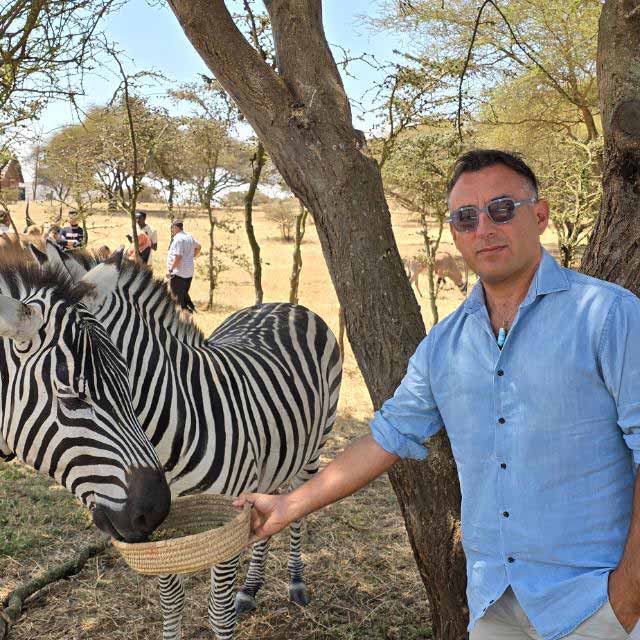
The wild animals you will see on excursions and safaris are kept at a distance from man(here you can find the latest group safari offers in Tanzania). They are used to being seen in Serengeti National Park or Arusha National Park.
However, it can happen that an animal gets angry and attacks a human being. For this reason, we always advise you to adopt the rules of common sense. This means not getting too close to the animals you are observing, and respecting their habits and space.
In all cases, always follow the advice of your tour operator and local guide. This is the best way to avoid harmful and dangerous behavior, not only for yourself but also for the rest of the group.
Specific local hazards
The hazards we have described so far apply to Tanzania in general. However, some risks may be considered more specific, or even limited to certain areas in particular.
That’s why we always advise you to adopt preventive behavior. This includes making sure you know exactly where you’re going on vacation.
Sometimes there are clashes between demonstrators and the police on the islands of Unguja and Pemba. These demonstrations carry the risk of terrorist attacks, especially in town. On the other hand, assaults can occur on isolated beaches. To avoid the risks, avoid isolated areas at night and stay away from places where there are demonstrations or gatherings.
On the other hand, in border areas with other African countries, there are other dangers to watch out for. Beware of armed gangs in the area near Burundi. You should also be on the lookout for unresolved tensions on the border with Malawi.
The latter is also subject to violent episodes such as armed attacks. In the regions bordering Kenya, there can be violent episodes of a political nature.
Keep in touch with local authorities to reduce risks: always follow instructions and warnings, and never act alone.
Crime
We’ve already had occasion to mention the widespread criminality in these areas. It’s worth remembering, however, that there have also been kidnappings in recent years. That’s why you shouldn’t trust the first person you meet.
We also advise you to stay in your room or in the cab. Make sure the cab is authorized, and call it directly from the hotel.
To avoid any further risk, pay attention to everything we’ve analyzed. Avoid less-frequented neighborhoods and isolated areas. Don’t retaliate against attempted robberies, which can lead to very violent and dangerous episodes.