

Tanzania is a land that, in recent times, has been enjoying some success especially from the point of view of tourism: it is located in East Africa, bordering Kenya, Mozambique, Malawi, Zambia, Congo, Burundi, Rwanda and Uganda, and it deserves some attention especially with regard to its geography, which makes it an enchanting and perspective-rich place. Surrounded by bodies of water, waterfalls and mountains, Tanzania is also an interesting location because of its coastline and islands, which are of relevant tourist interest (one among them, Zanzibar, which is well known among travelers).
Also discover: what to see in Tanzania.
Where Tanzania is located: map
Tanzania’s location is particularly strategic, which is precisely why its map deserves some attention: it is truly the place for any kind of tourist, because with its many large lakes, high peaks, and rich coastline, it is able to offer relaxation, entertainment, but also many noteworthy attractions from a cultural, artistic, and religious point of view.
It is located in East Africa, more specifically south of Kenya, and is the largest country in this part of the continent: not coincidentally, in terms of its size, it is three times the size of Italy, and is the 31st largest country in the world. Its geography is quite vast and articulated: to the northeast there are numerous mountain ranges (including the Meru and Kilimanjaro volcanoes), while to the west there are savannas (very noteworthy is the Serengeti National Park), and large lakes (particularly Lake Victoria and Tanganyika). To the east, however, it faces the Indian Ocean, and includes Zanzibar, Mafia, and Pemba, among other islands.
History of Tanzania
Tanzania has a very ancient history, dating back more than 10000 years, when it was inhabited (according to some sources) by a prehistoric hunter-gatherer group of the Khoisan language group: it was not until 5000 years later that, with an initial integration by immigration of other groups, animal husbandry and agriculture were introduced.
In any case, this area of Africa has, over the centuries, been one of the most colonized and certainly one of the most politically, historically, and culturally interesting places: giving a brief nod to its history, in addition to an early attempt at European colonization had in the 16th century by the Portuguese, it was in the 19th century that the most famous German colonization of the country took place. Earlier, that is, in the second century CE, early Persian-Arab trade relations had taken place, which were credited with contributing largely to the establishment of the Swahili language but also to the formation of coastal culture.
What emerges, just by analyzing the official language of Tanzania, is the great variety of cultures and linguistic borrowings that have probably occurred over the centuries precisely because of the large variety of ethnic groups in the country: today about 125 ethnic groups are calculated, with linguistic and social groups that are really very varied.
The term Tanzania is the result of the union (not only linguistically, but also politically, socially and culturally) of Tanganyika and Zanzibar: this union occurred in 1964, when the two countries, having gained independence, became today’s United Republic of Tanzania.
Best time for a trip to Tanzania
As is often the case, it is not possible to establish a best time for everyone to visit Tanzania, because many aspects affect this choice and not all tourists have the same interests and needs and requirements: while it is true, however, that most people prefer to avoid seasons that are too rainy, it is also true that even in this case one cannot speak in general terms, because the choice depends mostly on the area one wishes to visit.
Generally speaking, we can say that those who prefer a drier season might consider May to October as the best season: thereafter, and until early May, the rainy season takes over instead, which, however, may be a reason for other tourist groups to be interested.
We say this because, as we have anticipated, it all depends on the type of experience you intend to have: if, for example, you want to go on safari in Tanzania, the ideal choice is the dry season, while the rainy season is very rich and promising if you want to pay a visit to Serengeti National Park to see wildebeest and zebra (but also lions and other predators).
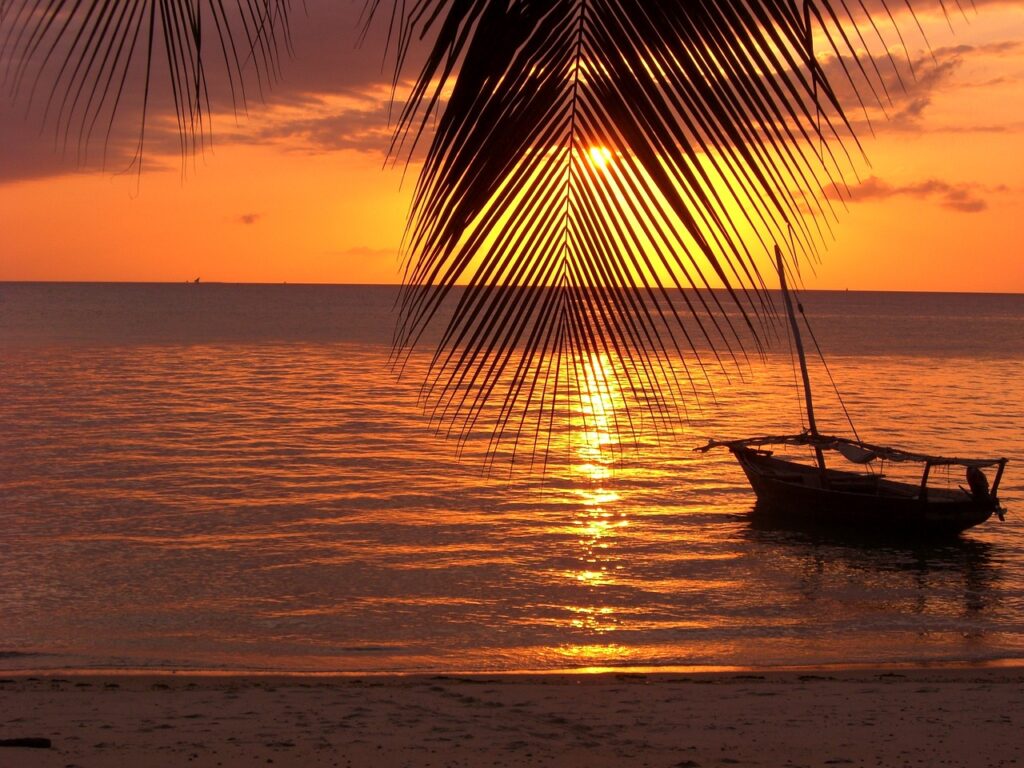
Instead, since the absolute hottest months are January and February, they are the ideal time for those who want to enjoy the sea and beaches with pristine views, partly because of the particularly promising climate (not suitable, however, for those who do not like the heat).
Nature, climate and environment of Tanzania
Just like its morphology and geography, Tanzania’s climate is also particularly articulated, and it is greatly influenced by the territories: in fact, it is mainly the rainy seasons that determine Tanzania’s climate depending on the area you are in, which is also why knowing the seasons helps you choose, as we have seen, the best time for a trip to these beautiful areas (this, of course, also depending on your own interests and needs).
Tanzania offers many experiences, from many different angles and points of view: in fact, the tourist interested in visiting parks and savannahs may have their work cut out for them, but there is no shortage of coastal beauty and islands, which offer an extra cue for simple fun and relaxation. If you wish to visit to get in full contact with nature and its unspoiled beauty, you certainly cannot fail to travel to Serengeti National Park, but the waterfalls and safaris are also noteworthy, and definitely worth doing at least once in a lifetime.
The climate is variable, precisely because the area’s terrain is so varied: it ranges from a tropical climate (tends to be warm-humid) along the coast to a temperate climate to a semi-arid climate in the inland parts (particularly in the highlands).