

You can go on a safari in about ten countries in Africa, but there are only a few top destinations:
- Tanzania and Kenya for the Great Migration and the vast savannas;
- Botswana for the Okavango Delta;
- South Africa for Kruger National Park and malaria-free private reserves;
- Zambia and Zimbabwe for walking and canoeing safaris;
- Namibia for its deserts and self-drive tours;
- Uganda and Rwanda for the mountain gorillas.
A well-organized safari costs an average of €250 to €600 per person per day, not including flights, but prices range from less than €150 for camping to over €1,500 at the most exclusive camps. Your choice depends on four factors: what you want to see, when you can travel, how much you want to spend, and how much comfort you’re looking for.
A Comparison of the Best Countries for a Safari in Africa
| Country | Highlights | Best time to visit | Estimated daily cost per person | Ideal for |
|---|---|---|---|---|
| Tanzania | Serengeti, Ngorongoro, Great Migration year-round, Big Five, Kilimanjaro, the beach in Zanzibar | June–October, January–February | €250–600 (luxury over €800) | First safari, safari plus beach |
| Kenya | Masai Mara, Amboseli with views of Kilimanjaro, Samburu | July–October, January–February | 250–550 € | Short safaris, crossing the Mara River |
| Botswana | Okavango Delta, Chobe with its herds of elephants, Kalahari | June–October | 600–2,000 € | Unspoiled nature, luxury travel |
| South Africa | Kruger National Park and private reserves, excellent accommodations, malaria-free areas | May–September | €120–250 for independent travel, €500 and up in private reserves | Families, combined with Cape Town |
| Namibia | Etosha, Namib Desert, Damaraland | May–October | 150–300 € by car (self-drive) | Road trips, landscape photography |
| Zambia | South Luangwa, the birthplace of walking safaris; Lower Zambezi by canoe | June–October | 400–900 € | Experienced travelers |
| Zimbabwe | Victoria Falls, Hwange, Mana Pools | July–October | 300–800 € | Walking safaris, waterfalls |
| Uganda and Rwanda | Mountain gorillas, chimpanzees, and savanna parks in Uganda | June–September, December–February | 300–700 €, plus the gorilla permit | Primates, forests |
The figures are approximate ranges for 2026, including lodging, meals, a vehicle, a guide, and park entrance fees. They do not include international flights.
East Africa: The Land of the Classic Safari
The word itself comes from here: “safari” means “journey” in Swahili. Tanzania and Kenya offer the most classic image of a safari: endless plains, umbrella acacias, herds moving as far as the eye can see, and the Maasai in their villages. At the heart of it all is the Serengeti–Mara ecosystem, where every year some two million wildebeests, zebras, and gazelles move in a circular pattern following the rains.
Tanzania. It is the country with the largest area of protected lands in the region. Here you’ll find the Serengeti and the Ngorongoro Crater, where you can see the Big Five in a single day. The Great Migration remains in Tanzania for about ten months a year. The wild south, with Ruaha and Nyerere, is visited by few tourists. Safaris can easily be combined with a trip to Kilimanjaro and the beaches of Zanzibar.
Kenya. The Masai Mara is the setting for the Mara River crossings between July and September. Nairobi has excellent air connections, and the network of reserves is diverse. The distances are shorter, but during peak months, the Mara is much more crowded than the Serengeti. The pros and cons of the two countries are outlined in our comparison, “Kenya or Tanzania: Which Safari to Choose.”
Uganda and Rwanda. These are the destinations for mountain gorilla trekking, where you can observe the gorillas for an hour after a hike through the forest. The permit costs $800 in Uganda and $1,500 in Rwanda, and must be booked months in advance. Uganda also has savanna parks, such as Queen Elizabeth and Murchison Falls, and offers the chance to see chimpanzees in the Kibale Forest. Details can be found on our page about safaris in Uganda.
Southern Africa: Comfort, Rivers, and Deserts
Botswana. The Okavango Delta is a labyrinth of channels and islands that you explore by mokoro, the traditional canoe. Here, the government has opted for a form of tourism with few visitors and high costs: there are few camps, and they are remote, often accessible only by plane. You can explore it in peace, but the price reflects that.
South Africa. Kruger National Park and the private reserves bordering it offer excellent wildlife viewing opportunities and paved roads, and you can explore them by driving on your own. Some reserves, such as Madikwe and those in the Eastern Cape, are outside malaria-prone areas and are a popular choice for those traveling with young children.
Namibia. It’s the perfect destination for a self-guided off-road adventure. You’ll travel through the red dunes of Sossusvlei, the waterholes of Etosha—where animals gather in broad daylight during the dry season—and the Skeleton Coast. More than just a safari, it’s a journey through breathtaking landscapes.
Zambia and Zimbabwe. These are destinations for those who have already been on a safari and are looking for a different kind of adventure. The walking safari was born in South Luangwa, Zambia. In Mana Pools, Zimbabwe, you can walk among elephants on the banks of the Zambezi River. And right in the middle of it all are Victoria Falls.
Other Regions: Central and West Africa
Gabon features equatorial forests, lowland gorillas, and Loango National Park, where elephants and hippos sometimes come ashore. It is a niche destination—expensive and with few accommodations. In other parts of Central and West Africa, the security situation is unstable. For countries such as Mali and Burkina Faso, the State Department advises against travel; therefore, it is essential to consult the “Travel Safety” advisory before planning any trip. As for wildlife viewing, however, the opportunities in these regions are nowhere near those found in East and Southern Africa.
How much does an African safari cost
?
There are four main factors that affect the price:
- Accommodations. Options range from camping in tents set up by staff to mid-range lodges, all the way to luxury tented camps with just a few tents and expert guides.
- Park fees. In Tanzania, Kenya, and Botswana,these fees are high and are charged per person for each day of your stay. In the Serengeti, the entrance fee is over 80 USD per day, plus a concession fee for each night spent inside the park.
- Vehicle and guide. A private safari costs more than a group safari, but allows you to manage your schedule and stops as you wish.
- Domestic flights. Air safaris save time but add several hundred euros to the cost.
In addition to these costs, you’ll need to factor in the international flight (typically €700 to €1,200 from Italy), a visa, insurance, and tips. A realistic example, with a detailed breakdown of each expense for an 8–10-day trip, can be found in our guide on How much does a safari in Tanzania cost?.
What type of safari to choose
Off-road safari
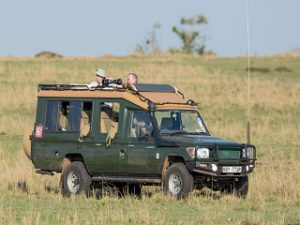
This is the most popular format in East Africa. You travel in a 4×4 with a retractable roof, allowing you to observe and photograph while standing. You sleep in lodges or tented camps and travel overland between parks. This way, you can see the villages, markets, and landscapes between the parks, and the cost remains lower.
Air Safari
Small planes connect the dirt airstrips within the parks. An air safari is ideal if you only have a few days or are visiting remote parks. It costs more and means you lose touch with the terrain as you move from one park to another, but it offers unforgettable views from above.
Safaris on foot, by boat, or in a hot-air balloon
These are experiences to add to your off-road safari:
- a walk with an armed ranger, who helps you spot tracks, plants, and insects that you’d miss from a vehicle;
- a river cruise on the Nyerere, Chobe, or Zambezirivers;
- a hot-air balloon ride at sunrise over the Serengeti or the Masai Mara.
Overland and self-guided safaris
Overland tours travel in equipped trucks, with groups of 12–24 people who sleep in tents and pitch in with camp life. They are inexpensive and sociable, but physically demanding, and are mainly offered in Southern Africa. In South Africa and Namibia, you can also rent a car and explore on your own. In Tanzania and Kenya, however, a guide is practically indispensable: park regulations, the trails, and tracking animals all require experience.
Private or group?
A private safari includes a dedicated vehicle and guide, as well as a customized itinerary. It’s the best choice for couples, families, and photographers. A group safari costs less and allows you to meet other travelers, but you’ll need to adapt to the pace of the others. On a good group safari, the vehicle carries no more than 6–7 passengers, and everyone has a window seat.
The Most Common Mistakes When Planning a Safari
- Too many parks in too few days. An itinerary with a different park every day may seem more exciting, but it means waking up at 5 a.m. and spending hours on the road. In Africa, 200 km of dirt roads can take an entire day. Plan for at least two nights in the main parks.
- Choosing based solely on price. Price differences often hide substantial differences: the location of the lodges (inside or outside the park), the number of people per vehicle, the guide’s experience, and whether taxes are included or excluded.
- Ignore the season. The same week can be perfect in Tanzania and rainy in Botswana. Plus, the migration shifts from month to month.
- Don’t ask what’s included. In Tanzania, full board in the parks is the norm, but drinks, tips, visas, insurance, and optional activities are usually not included.
Questions to Ask the Tour Operator
- Are park fees and permit fees included in the price?
- What is the maximum number of people in the vehicle? Does it have a sunroof?
- Does the guide speak Italian or English? How many years has he or she been working in the parks?
- Is the lodging inside or outside the parks? How many kilometers do we travel each day?
- What happens in the event of a breakdown or a medical emergency?
- Is the tour operator based in Africa, or does it act as an intermediary?
Before booking, it’s worth reading the reviews of those who have already traveled with us: ours are compiled on the traveler reviews page.
Why We Choose Tanzania (and When We Don’t)
We’re a tour operator based in Arusha, and Tanzania is the country we know best. For a first safari, we consider it the most well-rounded choice for four reasons:
- the high density of wildlife in the Serengeti and Ngorongoro;
- the Great Migration, visible almost every month;
- the value for money in the mid-range price bracket;
- the opportunity to end your trip on the beaches of Zanzibar.
However, there are cases where another country is a better fit, and we’ll let you know:
- If gorillas are your dream, go to Uganda;
- If you want to drive on your own, Namibia;
- if you’re traveling with very young children and want to avoid malaria entirely, the reserves in South Africa.
Frequently Asked Questions About Safaris in Africa
What is the best country for a safari in Africa?
For a first-time safari, Tanzania and Kenya are the most well-rounded destinations, thanks to the Great Migration and the high density of wildlife. Botswana is ideal for an exclusive safari, South Africa for comfort and malaria-free areas, and Uganda and Rwanda for gorillas.
How much does a safari in Africa cost?
A well-organized safari costs, on average, between 250 and 600 euros per person per day, not including international flights. Prices start at less than 150 euros for camping or independent travel and can exceed 1,500 euros at luxury camps in Botswana.
When is the best time for a safari in Africa?
In most countries, the best time is the dry season, from June to October, when the grass is short and the animals gather near water sources. In Tanzania, January and February are also excellent months, as that’s when the wildebeests give birth in the southern Serengeti.
How many days do you need for a safari?
For a fulfilling safari, you’ll need at least 5–7 days in the parks, not counting travel time. With 10–14 days, you can visit more parks, go on a trek, or spend a few days at the beach without rushing.
Where can you see gorillas in Africa?
Mountain gorillas can be seen in Uganda’s Bwindi and Mgahinga National Parks, and in Rwanda’s Volcanoes National Park. Permits cost $800 in Uganda and $1,500 in Rwanda and must be booked well in advance.
Is a private or group safari better?
A private safari offers a customized itinerary and pace and is ideal for couples, families, and photographers. A group safari costs less and is suitable for those traveling alone or enjoying company, as long as the vehicle is not overcrowded.
If Tanzania is your choice, you’re in the right place. You can start with a comprehensive itinerary like the Kudu Safari , combine savannah and ocean with one of our safari and Zanzibar combos , or tell us about your ideal trip and let us design the itinerary.
Tanzania Safari Specials: 5- to 7-day group tours at a promotional price.