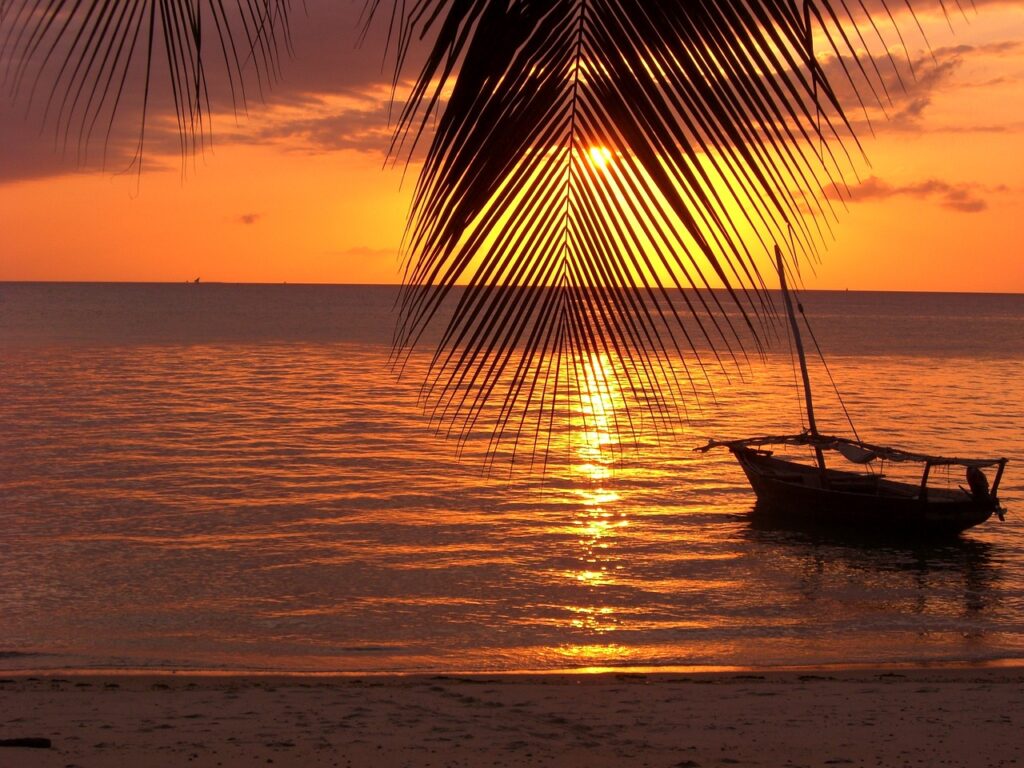
When one decides to embark on a long and expensive trip to take a dream vacation, it is very important to know how to find the right option to make the experience truly unique and unforgettable and not to be disappointed in any way. In fact, there are many considerations that need to be made, and many of them are also particularly important for everything to go right.
Learn about our tours and trips to Tanzania.
First of all, you have to consider the best season, and this option has to be analyzed very well and making the right assessments because if you choose a period that is not suitable for certain activities you may be disappointed.
Zanzibar is a fascinating destination in Tanzania that offers different opportunities depending on when you visit. Whether you are planning an adventurous safari, a relaxing beach stay, or an authentic cultural experience, knowing the best time to go to Zanzibar is critical to maximize enjoyment and minimize disappointment. The choice of when to go to Zanzibar depends strictly on your personal preferences, the activities you want to do, and the weather conditions you prefer.
Those who prefer safaris in particular need to analyze this very well because depending on the season in which they arrive in Zanzibar they may or may not see certain animals; in addition, the issue of climate and temperatures also needs to be considered, because the climate is tropical and temperatures are high all year round, but in some seasons it is definitely more bearable while in others there is a risk of encountering a lot of rainfall.
Zanzibar when to go: the best time and seasons
Depending on what you prefer to do, the activities you want to do, and the experiences you want to have, there are seasons that are best preferred and periods that are best avoided.
Precisely because everyone’s needs may differ greatly from one another, the best time of year may not necessarily be for everyone.Therefore, it is good to find out about activities and figure out the best time of year to be able to do them without risk or disappointment.
Thus, the best time to go to Zanzibar will vary depending on your specific priorities and interests, making a preliminary assessment of your travel preferences important.
Generally speaking, the greatest influx of tourists occurs during August and the Christmas and New Year period: this is also the period, however, when costs are higher precisely because of the large influx of tourists who prefer to travel to this area of Tanzania to experience a vacation of relaxation (there are numerous spas present and also resorts) and entertainment (Tanzanian culture is very rich in terms of music and dance, for example).
During these peak season months, accommodations reach peak occupancy, and prices for lodging, tours, and activities can increase significantly compared to other seasons of the year.
The driest and most pleasant period
Climatically, the best season is from January to February because these are the months when temperatures are milder and at the same time there is no high risk of precipitation. During this time interval, skies remain mostly clear and rain episodes are rare, making this window ideal for outdoor activities such as excursions in Stone Town, visits to historical sites, and scuba diving.
If your main goal is to enjoy stable and predictable weather conditions, January and February are indeed the absolute best time to visit Zanzibar.
See also our: 12-day Tanzania + Zanzibar safari.
Zanzibar when to go: the rainy season and its opportunities
The so-called rainy period is the one that needs to be taken into consideration because, depending on one’s preferences, it is important to figure out whether to avoid it or to prefer it: the big rainy season runs from mid-March to June, and during this period it is possible to organize some interesting safaris both in the Serengeti Park and especially in the Ngorongoro Crater, when one can witness the mating between the animals.
Although rainfall is more frequent, this season offers a verdant landscape and very active wildlife, thus attracting more adventurous travelers and those who wish to experience authentic African nature.
Then there is another season, which is the season of small rains, which runs from mid-October to mid-December, and is the preferable time for those who do not want to risk having it rain seven days a week (although there are exceptions). Therefore, it should be avoided if you prefer warmer weather and want to engage in beach activities, although during the dry days conditions are still very favorable for tourism.
Zanzibar when not to go: times to avoid
Understanding when not to go to Zanzibar is just as important as knowing the ideal times. If your main interest is spending whole days on the beach with the assurance of clear skies, you should avoid the rainy seasons.
The big rainy season (mid-March-June) experiences substantial and prolonged rainfall that can limit beach activities and make some excursions difficult. Similarly, the small rainy period (mid-October-mid-December), although less intense, still has scattered rainy days that may interfere with your plans to relax on the beach.
Zanzibar when to go: best time based on climate
But when is it appropriate to go to Zanzibar depending on the climate? It all depends on what we prefer, always assuming that temperatures in Zanzibar never drop below 20° because the climate tends to be tropical and simply offers variations depending on the months and seasons.
The best time to go to Zanzibar without risking catching consecutive days of rain includes the months of December, January, February and March (preferable for those who like high temperatures, around 30°C), and the months of June, July, August, September and October for those who prefer slightly lower and pleasant temperatures, which are around 26°C. This second window is therefore an excellent solution for those who wish to avoid excessive heat while still maintaining generally favorable climatic conditions.
What months to avoid in Zanzibar
Precisely because everyone has his or her own preferences and needs, we cannot say with certainty that certain months are necessarily to be avoided because in fact the seasons that some would avoid are precisely those that many others prefer, due to certain factors: in fact, we can admit that the low season (which is also the least expensive one) goes from September or October, with temperatures that never go below 20° anyway and with a possible maximum of 30°.
However, it should also be added that these months, although avoided by some, represent for those who love relaxation and tranquility the right choice and the correct compromise to visit this beautiful place without spending too much. If your budget is limited and you wish to avoid the tourist crowds, seriously consider this option: you may find great deals on accommodations and tours precisely during these low season periods.
Again, rainy seasons are to be avoided if you are planning a lot of beach bathing, if you prefer the sunny and warm island, and if you are not interested in some safaris such as the Great Migrations. In these cases, the best time to go to Zanzibar undoubtedly remains the dry and sunny period from June to October and December to February.
When to go if you love the heat
If you prefer scorching temperatures, the best time is definitely February, with really very high temperatures, which can reach 33-34° during the day. This month represents the peak of humid heat, so be prepared for light clothing and adequate sun protection.
Another hot period is December and January, when you may find very sultry heat especially during the day, with temperatures never dropping below 24° at an average of 32°. During this time the sun is also very scorching, reasoning that it is always a good idea to bring sunscreen with you, even if you are not on the beach (an activity preferred by those who travel to Zanzibar at this time of year anyway).
If you really love the high temperatures and intense tropical atmosphere, these three months (December, January, February) are the best time to fully experience the equatorial heat of Zanzibar.
Water temperature, tides and other environmental factors
The temperature of the water mostly mirrors that of the air, in that it is definitely higher and more pleasant in the months from December to March, while it drops in the cooler period, namely in the months from July to October.
It should be remembered, however, that Zanzibar is warm throughout the year, so it is difficult to find water temperatures lower than in the Mediterranean during the summer. This makes Zanzibar a reliable beach destination in every season, with waters that are always suitable for bathing.
However, attention needs to be paid to winds and tides if you are planning a trip to Zanzibar.Regarding the former issue, it will certainly be of great interest to kitesurfers, since Zanzibar is generally a fairly windy island, with the Kazkazi blowing in a northeast direction during the months from December to February and the Kuzi, on the other hand, being more present during the period from July to mid-September. Windsurfers and kitesurfers will find ideal conditions during these windy periods, making these months particularly attractive for water sports.
As for the tides, this phenomenon on this island is particularly present and can be a cause for concern for some since, when they are present, they tend to change the landscape and place certain limitations when, for example, there is a peak high tide, but there is nothing that cannot be solved. Tides can affect access to certain beaches and snorkeling areas, so it is good to inquire beforehand.
Many people wonder what is the best time to avoid this phenomenon, but while it is possible to give precise indications about climate and temperatures, the same cannot be done with regard to the tidal phenomenon because it is present (with high and low peaks) throughout the year, with cycles related to many factors that cannot always be predicted (for example, the earth’s orbit and movement and gravitational attraction).
Generally speaking, we can say that the North zone is the one that is least affected by this phenomenon compared to the East, West and South zones: this happens because of the particular morphological conformation of the Kendwa and Nungwi areas, where the reef is a bit more distant and where the sea turns out to be always present. More than the period, therefore, it is good to aim for the location: if you do not like tides, this is the area to prefer.